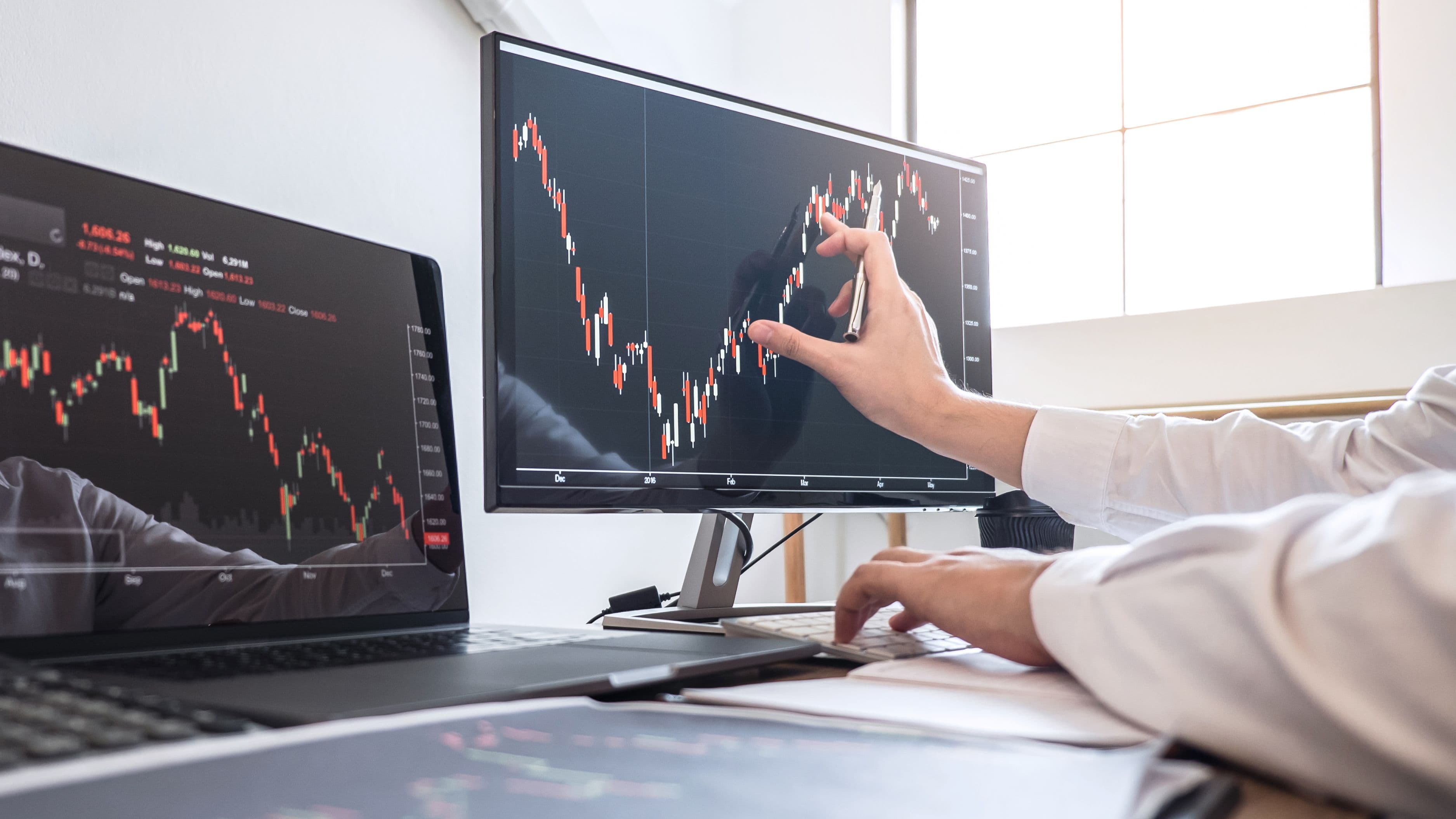
The tools, data, and infrastructure that once required millions of dollars and a team of engineers are now available to individual investors for a few hundred dollars a year, sometimes less. That shift is real, and it's worth understanding clearly – both what it makes possible and where the limits actually are.
What Algorithmic Trading Actually Is
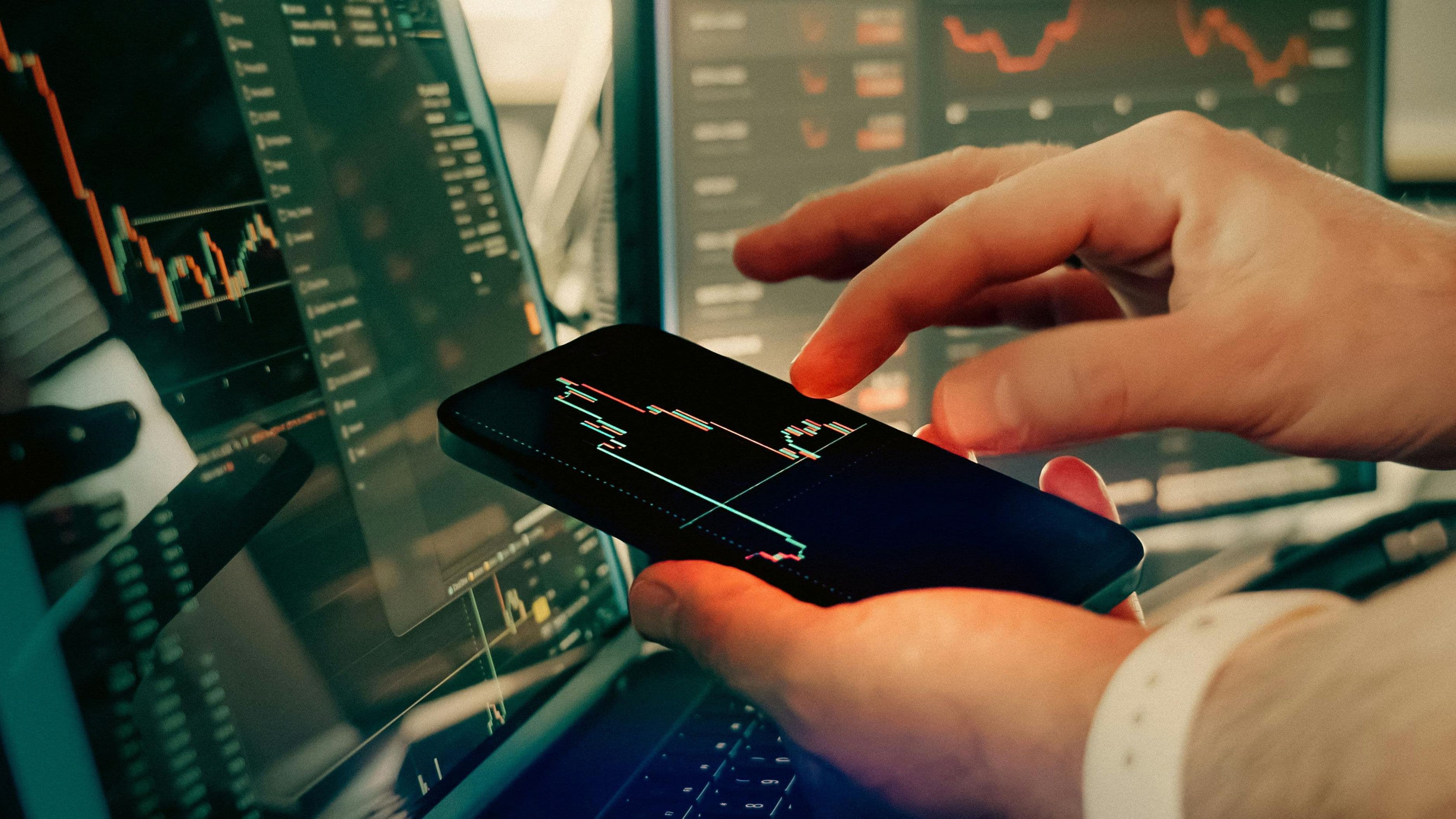
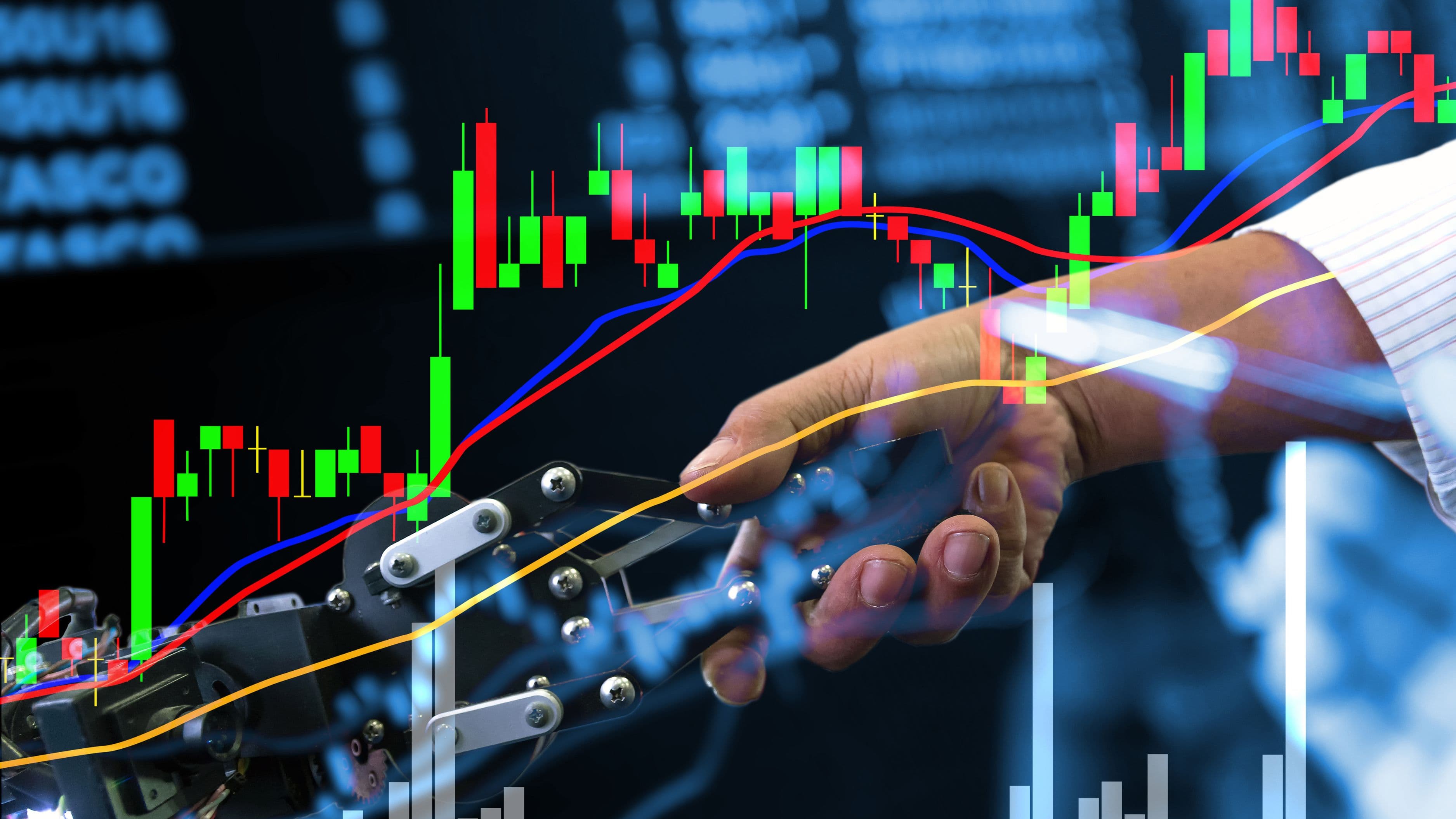
Algorithmic trading means using a computer program to execute trades based on predefined rules or conditions, rather than making each trade decision manually in real time. The "algorithm" is simply the set of instructions: if price crosses above a certain moving average, buy; if a position drops by a certain percentage, sell; if two historically correlated assets diverge beyond a threshold, take both positions simultaneously.
The rules can be simple or extraordinarily complex. At the institutional level, algorithms incorporate machine learning models trained on decades of market data, alternative data sources, and execution logic designed to minimize market impact across hundreds of simultaneous positions. At the retail level, an algorithm might be a straightforward set of technical conditions that triggers a trade in an ETF when specific criteria are met.
What both share is the core proposition: remove the human in the loop from individual trade decisions and let a system execute consistently, at speed, without emotional interference. A human trader hesitates, second-guesses, gets tired, reacts to news with fear or excitement. An algorithm executes the same way at 9:31 AM on a Monday as it does at 3:58 PM on a Friday, market conditions permitting.
Why Retail Access Has Changed Dramatically
Three shifts in the market infrastructure have collectively opened algorithmic trading to individual investors in ways that didn't exist even five years ago at meaningful scale.
Commission-free trading removed the per-trade cost that made high-frequency or rules-based strategies economically unworkable for small accounts. When a trade cost $7–$10 in commission, running a strategy that made ten trades a week consumed hundreds of dollars a month before any return. When the cost of execution drops to near zero – as it now has at Robinhood, Schwab, Fidelity, and most major retail brokerages – the economics of systematic trading strategies become viable at much smaller account sizes.
API access to brokerage accounts is the second shift. APIs (application programming interfaces) allow software to communicate directly with a brokerage platform – placing orders, checking positions, retrieving account data – without a human clicking through a trading interface. Brokers including Interactive Brokers, Alpaca, TD Ameritrade (now part of Schwab), and Tradier now offer API access to retail accounts with no special requirements beyond account approval. This is the technical bridge that allows a strategy written in Python or a no-code platform to actually execute trades in a real brokerage account.
No-code and low-code platforms are the third and most recent shift. Building a trading algorithm from scratch in Python still requires programming skill. But platforms like Composer, Streak, Trade Ideas, and Quantconnect now allow investors to build, backtest, and deploy systematic strategies using visual interfaces, pre-built logic blocks, or straightforward code templates. Someone with no programming background can construct a rules-based strategy, test it against historical data, and connect it to a live brokerage account in an afternoon.
Together, these three changes mean the barrier to algorithmic trading is no longer technical capacity or institutional access. It's knowledge, risk management, and realistic expectations.
What Retail Algorithmic Tools Look Like Today
The range of available tools spans a wide spectrum, from plug-and-play robo-like services to platforms that give technically capable individuals near-institutional infrastructure.
Composer is probably the most accessible entry point for investors who want systematic, rules-based portfolio strategies without writing code. It uses a visual editor to build "symphonies" – investment strategies with conditional logic that automatically shifts between assets based on market conditions. A strategy might hold an equity ETF when momentum is positive and shift to a bond ETF or cash when it isn't.
Composer connects directly to brokerage accounts and executes rebalancing automatically. The platform is designed for investors who understand the concepts behind systematic investing but don't want to write software.
Alpaca is the right tool for investors who are comfortable with Python and want full control over strategy logic and execution. It provides a commission-free brokerage API specifically designed for algorithmic trading, with extensive documentation, paper trading (simulated trading on live market data) for strategy testing, and a community of developers sharing approaches. The platform itself charges no fees for basic usage; you trade with real money through their brokerage infrastructure.
QuantConnect provides a cloud-based environment for building, backtesting, and deploying algorithmic strategies across equities, options, futures, forex, and crypto. It has a steeper learning curve than Composer but offers more depth – access to extensive historical data, a framework for testing strategies with sophisticated statistical rigor, and live trading deployment across multiple brokerages. It's the platform closest to what a professional quant shop uses, made accessible to individual developers.
Interactive Brokers deserves mention for its own reason: it is the brokerage most commonly used by sophisticated retail algorithmic traders precisely because it has deep API functionality, access to global markets, and a trading infrastructure that has been built for active, systematic use. Its interface is not beginner-friendly, but for an investor who has built a strategy and wants the most capable execution environment, it's the clear choice.
At the simpler end, brokerages like Schwab and Fidelity have introduced conditional order types and basic automated strategies within their own platforms – limit orders, stop triggers, automatic rebalancing – that represent a light form of rules-based trading accessible to anyone with an account.
What Retail Algorithmic Trading Is Actually Good For
Being realistic about what these tools are suited to is important, because the gap between the marketing narrative and the practical reality is real.
Removing emotion from execution is the most immediately valuable application for most retail investors. Even investors who have a clear strategy – rebalance quarterly, buy when the market drops significantly, take profits above a certain threshold – routinely fail to execute that strategy because the emotional context of a moving market makes rule-following difficult in real time. Automating those rules removes the execution problem entirely. The strategy runs whether you're watching or not, and whether the news that day is good or bad.
Systematic portfolio strategies – rules that determine allocation based on momentum, trend, volatility, or relative value signals – can be implemented and run consistently in ways that are hard to maintain manually. Many of the strategies that professional allocators use at institutional scale are accessible to retail investors who understand the underlying logic and can implement them in a platform like Composer or QuantConnect. They're not guaranteed to outperform, but they apply a disciplined, consistent framework that is typically better than discretionary decision-making driven by attention and emotion.
Automating repetitive, rules-based decisions that would otherwise consume time or mental energy is a genuinely practical use case. Automatic rebalancing back to target allocations, systematic tax-loss harvesting, dollar-cost averaging into specific positions – these are mechanical tasks that algorithms handle reliably. Delegating them frees you from having to monitor and maintain them manually.
Where the Limits Are – and Why They Matter
The accessibility of these tools doesn't mean the difficulties of algorithmic trading have been eliminated. They've shifted, not removed.
Overfitting is the most common technical trap. When you test a strategy against historical data, you're looking for patterns that would have worked in the past. The danger is building a strategy so precisely tuned to past conditions that it performs beautifully in backtesting and fails immediately in live trading, because the specific conditions that made it work don't recur. Backtesting on data that was used to design the strategy is not a valid test of whether the strategy has genuine predictive power. Rigorous strategy testing requires out-of-sample validation, realistic transaction cost modeling, and awareness of the survivorship bias in historical market data.
Execution quality at retail scale differs from institutional. High-frequency strategies that rely on being faster than other market participants to capture small price discrepancies are not viable for retail investors. The latency, infrastructure, and colocation requirements that make microsecond execution possible are still institutional-grade problems. Retail algorithmic trading works at a different timescale – minutes, hours, days – not milliseconds.
Systematic strategies can fail in regime changes. A strategy built on relationships that held for ten years can stop working when the market environment changes fundamentally. Rising rate environments, liquidity crises, and structural shifts in how markets function can invalidate assumptions that underpin even well-constructed systematic approaches. No algorithmic strategy is permanently valid; they require monitoring, updating, and a realistic understanding of the conditions under which they were designed.
The platform doesn't substitute for the strategy. Access to algorithmic trading tools doesn't tell you what strategy to run. Most of the work in algorithmic trading is designing a strategy that has a genuine edge, understanding why that edge should exist, and managing risk correctly. The platform just executes. Investors who approach these tools expecting the technology itself to generate returns are likely to be disappointed – and possibly to lose money systematically rather than randomly.
What This Means for You
If you're a hands-on investor who currently manages a portfolio manually and finds yourself making emotionally influenced decisions, drifting away from a planned allocation, or struggling to execute rules you know you should follow – algorithmic tools solve a real problem you have. Platforms like Composer let you encode your strategy and let it run. That's a meaningful practical improvement that doesn't require advanced technical skills.
If you have programming skills and genuine interest in quantitative strategy development, platforms like Alpaca and QuantConnect make building and testing systematic approaches accessible without institutional infrastructure. The ceiling for what you can build is high if you have the skill and rigor to build it well.
If you're approaching this primarily because algorithmic trading sounds like a path to reliable outperformance, that's worth interrogating carefully. The tools are real. The difficulty of building genuinely profitable systematic strategies – and the discipline required to maintain and trust them through periods when they aren't working – is also real. Accessibility has lowered the barrier to entry. It hasn't lowered the bar for doing this well.
FAQ
Do I need to know how to code to use algorithmic trading tools? Not anymore, for many platforms. Composer and Streak let you build rules-based strategies with visual interfaces. Betterment and similar robo-advisors automate systematic strategies entirely. If you want full control over strategy logic and custom execution, Python skills open significantly more options – but the no-code category has matured enough that coding is no longer a hard requirement.
How much money do I need to start? Platforms like Alpaca allow paper trading (simulated) with no money at all, which is the right starting point for learning. For live trading, Composer has a minimum that varies by plan; Interactive Brokers has minimums that depend on account type. Most retail-accessible platforms are designed to work with accounts in the thousands rather than hundreds of thousands of dollars. That said, very small accounts generate very small dollar returns even from positive percentage gains, so realistic expectations about what the strategy needs to accomplish matter.
Is algorithmic trading legal for retail investors? Yes. Using automated systems to trade your own account is legal and unrestricted in the US and most major markets. The regulatory boundaries that exist around algorithmic trading apply primarily to market manipulation, front-running, and similar conduct – not to individual investors running systematic strategies in their own accounts.
Can algorithms predict market movements? Not reliably, and any tool or service claiming otherwise should be approached with significant skepticism. Systematic strategies can exploit statistical tendencies and behavioral patterns that have historically been persistent, but markets are adaptive – known inefficiencies get arbitraged away as more participants exploit them. The goal of a good systematic strategy is not prediction; it's having a disciplined, rules-based process that performs better than undisciplined discretionary trading over a long time horizon.
What's the difference between algorithmic trading and a robo-advisor? A robo-advisor manages a diversified portfolio for you based on your risk profile, using systematic rules around allocation and rebalancing – it's algorithmic in the technical sense but is designed to be a hands-off investment product. Algorithmic trading in the active sense means designing or running strategies with more specific entry and exit logic, often across shorter timeframes, with more direct control over what the system is doing and why. The former is a product you buy; the latter is something you build or configure.
📚 Sources
Alpaca – Commission-Free API Brokerage for Algorithmic Trading: https://alpaca.markets/docs/introduction/
QuantConnect – Lean Algorithmic Trading Engine Documentation: https://www.quantconnect.com/docs/v2/writing-algorithms
Composer – How Composer Works: https://www.composer.trade/learn
Interactive Brokers – Trader Workstation API Overview: https://www.interactivebrokers.com/en/trading/ib-api.php
CFA Institute – Algorithmic Trading and Market Microstructure: https://www.cfainstitute.org/en/research/foundation/2020/artificial-intelligence-in-asset-management