
Smart Tax & Accounting
Tax, audits, and accounting workflows getting faster with AI.


Can AI Help You Plan for Retirement More Accurately Than a Human Advisor?
Imagine asking a financial advisor to model every possible outcome for your retirement – adjusting for market crashes, inflation spikes, healthcare costs, career changes, and longevity risk – and having the answer back in under a minute. That's not a pitch for the future. AI retirement planning tools are doing that right now, and for a growing number of people, they're producing better starting projections than a human advisor working from a spreadsheet and a gut feeling. But "better starting projections" and "more accurate overall" are not the same thing, and that distinction matters enormously when the stakes are your financial security for the next 20 or 30 years.

Does AI Make Tax Filing Faster or Just More Confusing?
Tax season used to mean a shoebox of receipts, a confusing form, and either a stressful weekend or a bill from an accountant. Now it increasingly means a chatbot walking you through your deductions, a tax platform flagging missed credits automatically, and software that imports your financial data from linked accounts in seconds. AI has made a real entrance into the tax filing process – but whether it's actually making things easier depends a lot on who's using it and what they're dealing with.
How AI Detects Revenue Recognition Errors Before They Become Scandals
A mid-sized software company books revenue the moment a multi-year contract is signed, instead of spreading it across the actual service period. Nobody catches it for two quarters, until an auditor flags an unusual pattern and the company has to restate its earnings, spooking investors and triggering a stock drop. This exact scenario has played out at real companies more than once, and it's precisely the kind of error that AI-powered financial monitoring tools are increasingly built to catch months earlier.

How AI Helps Accountants Spend Less Time on Data Entry
Picture an accountant at 6 p.m., still manually typing numbers from a stack of receipts and invoices into a spreadsheet, matching each one to the right client and category by hand. That scene used to be a normal part of the job. It's becoming a lot less common, not because accountants are working faster on their own, but because AI is quietly absorbing the most repetitive part of the work before a human ever needs to touch it.

How AI Identifies Deductions You Would Have Missed
Most people leave money on the table at tax time – not because they're dishonest, but because tracking every qualifying expense across an entire year is genuinely difficult. A coffee meeting with a client in March, a software subscription that's partly for work, the miles driven to pick up supplies – each one is small, and each one adds up. AI-powered tax tools have gotten remarkably good at catching exactly this kind of thing, and the way they do it is more practical than most people expect.

How AI Is Changing the Audit Process for Mid-Size Companies
For decades, an audit meant a team of accountants showing up, pulling a sample of your transactions – maybe a few hundred out of hundreds of thousands – and hoping that small slice represented the whole. It was slow, partly guesswork, and stressful for everyone involved. That model is quietly being rewritten, and mid-size companies are feeling the change most.

How AI Is Detecting Transfer Pricing Manipulation Across Borders
A multinational company sells a product from its subsidiary in one country to its subsidiary in another, and the price they charge each other, on paper, determines how much profit shows up in each country's books, and therefore how much tax gets paid where. That internal pricing decision, called transfer pricing, has long been a place where some companies shift profits toward lower-tax jurisdictions in ways that stretch or break the rules. Tax authorities have historically struggled to catch this at scale, but AI is starting to change that equation significantly.

How AI Is Helping Businesses Comply with Global Tax Reporting Standards
Picture a mid-sized company selling products in a dozen countries, each with its own tax reporting deadlines, currency rules, and documentation formats. A few years ago, that meant a finance team drowning in spreadsheets and cross-referencing regulations manually, often catching errors only after a filing deadline had already passed. Today, a growing number of these companies are handing that exact headache over to AI systems built specifically for cross-border tax compliance.

How AI Is Helping Self-Employed Workers Estimate Quarterly Taxes
If you're self-employed, you already know the annual ritual: trying to figure out how much to set aside for the IRS each quarter, guessing at your taxable income, and quietly hoping you haven't underpaid by enough to trigger a penalty. For most freelancers, consultants, and independent contractors, quarterly tax estimation is one of the most stressful parts of running their own finances. It doesn't have to be.

How AI Is Helping Tax Agencies Prioritize Audit Targets
Picture a stack of a hundred million tax returns. Somewhere in there are the ones worth a closer look, and somewhere else are millions that are perfectly fine. For decades, tax agencies relied on a mix of red flags, random sampling, and human judgment to figure out which was which. Now, AI is quietly reshaping that entire process, and it changes what an audit actually looks like for the average taxpayer.

How AI Is Helping Tax Authorities Catch Unreported Income
Picture a freelancer who gets paid through five different apps, a landlord collecting rent partly in cash, and a small business owner running side sales through social media. A decade ago, these income streams were genuinely hard for tax authorities to trace without a manual audit. That's changing fast, and the reason isn't more auditors – it's AI systems that can cross-reference financial data at a scale no human team could match.

How AI Is Making Forensic Accounting More Powerful
Forensic accountants have traditionally spent weeks or months manually combing through financial records looking for the kind of subtle inconsistencies that signal fraud, embezzlement, or financial misstatement. That process is changing quickly as AI tools take over the initial heavy lifting, scanning millions of transactions for patterns a human reviewer would need far longer to notice, and freeing investigators to focus on the cases that actually warrant deeper human judgment.

How AI Is Making Payroll Smarter for Growing Businesses
Ask any business owner who's missed a payroll deadline or filed a tax correction what it cost them – not just in money, but in employee trust and time – and the answer is never good. Payroll has always been one of those back-office functions that has to be done perfectly every time, leaves almost no room for error, and somehow manages to get more complicated every year. For growing businesses especially, the gap between what payroll used to take and what it takes now is where AI is quietly delivering real, practical value.

How AI Is Streamlining Vat Compliance for Global Businesses
Picture a mid-sized e-commerce company selling into a dozen different countries, each with its own VAT rates, filing deadlines, and reporting quirks. A few years ago, that meant a finance team manually tracking rate changes, cross-checking invoices, and hoping nothing slipped through before a filing deadline. Increasingly, AI-powered tax software is handling that entire process in the background, and it's changing what "VAT compliance" actually requires from a business's finance team.

How Generative AI Is Writing Financial Reports — and What Gets Lost
A quarterly earnings summary that would have taken a junior analyst three hours to draft is now generated in under two minutes. The numbers are accurate, the formatting is clean, and the language sounds professional. At first glance, it's hard to tell the difference. Look closer, and you start to notice what isn't there.

How Small Businesses Are Using AI to Stay Tax-Compliant Year-Round
For most small business owners, taxes aren't a once-a-year task – they just feel that way until April hits and suddenly there's a scramble to locate receipts, reconcile months of transactions, and figure out what was actually deductible. The IRS estimated that small businesses collectively spend billions of hours on tax compliance each year, and a large portion of that burden comes from poor record-keeping throughout the year rather than the tax preparation itself.

Owe Back Taxes? Understanding Available Tax Relief Options
Getting a notice from the IRS about a balance you didn't know you owed, or one you've been putting off dealing with, triggers a very specific kind of dread. The instinct for a lot of people is to open the envelope, feel a wave of panic, and then set it aside because the whole system feels too complicated to tackle on a random Tuesday night. The reality is more workable than that reaction suggests. The IRS has a defined set of relief paths for people who owe back taxes, and understanding how they differ is most of the battle.

Tax Debt Options in 2026: What People Should Know
Owing the IRS money feels different from owing anyone else. There's no phone call from a collections agent you can screen, no minimum payment reminder buried in an app notification. Instead, the balance just sits there, quietly growing with interest and penalties, while the letters pile up. If you're carrying tax debt into 2026, the good news is that the system has more structured off-ramps than most people realize. The challenge is knowing which one actually fits your situation.

What Is AI-Enhanced Financial Consolidation for Multi-Entity Businesses?
If you've ever tried combining several months of your own bank and credit card statements into one clean budget, you know how tedious it gets even at that small scale. Now imagine doing that for dozens of subsidiaries, each with its own accounting system, currency, and reporting calendar, and needing the combined result to be accurate enough for investors, regulators, and executives to make real decisions from. That's the challenge financial consolidation solves for multi-entity businesses, and AI is starting to change how fast and accurately it can actually happen.
What Is AI-Powered Accounts Payable and How Does It Save Time?
Every business that buys things from other businesses has an accounts payable process. Someone receives an invoice, checks it against what was ordered, gets it approved, and eventually sends payment. In a small business, that might be one person doing it manually every few days. In a larger company, it could be an entire team processing thousands of invoices a month. Either way, the traditional version of this process is slow, error-prone, and surprisingly expensive – industry estimates suggest manually processing a single invoice costs businesses anywhere from $12 to $30 when you factor in staff time, corrections, and late payment fees.

What Is AI-Powered Cash Flow Forecasting and Who Needs It?
A business can be profitable on paper and still run out of cash. It happens more often than most people realize – a slow-paying client, a surprise expense, a payroll date that falls before invoices clear – and when it does, it can bring an otherwise healthy operation to a standstill. Traditional cash flow forecasting tried to prevent exactly this, but it was slow, labor-intensive, and only as good as the person doing the spreadsheet work. AI-powered cash flow forecasting changes the equation significantly, and it's no longer just for large corporations with dedicated finance teams.
What Is AI-Powered Financial Close and Why Do Cfos Care?
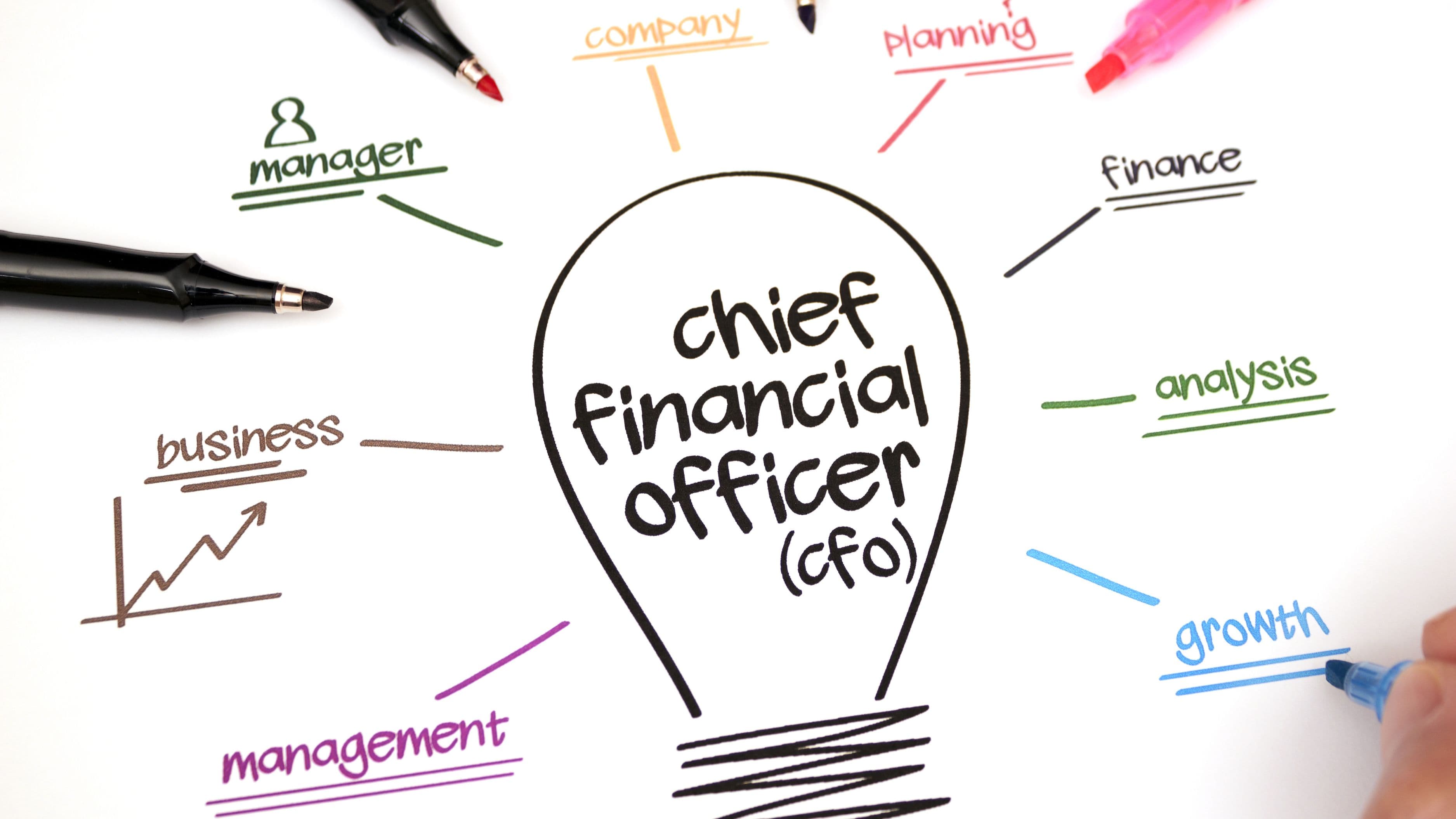
Picture a finance team spending the first ten days of every month manually reconciling spreadsheets, chasing down mismatched entries, and double-checking numbers before they can even start analyzing what the business actually did last month. That's the traditional "close" process, and it's exactly the kind of repetitive, deadline-driven work that AI-powered financial close tools are now being built to speed up dramatically, freeing finance teams to spend more time on analysis and less on data wrangling.

What Is AI-Powered Procurement Fraud Detection?
A mid-level employee at a large company sets up a fake vendor account, routes a handful of invoices through it over several months, and quietly pockets the payments before anyone notices the pattern. This kind of procurement fraud has existed for as long as businesses have had purchasing departments, but the way companies catch it has changed substantially now that AI systems can flag suspicious patterns across thousands of transactions in real time, something a human auditor reviewing spreadsheets simply can't match in speed or scale.

What Is AI-Powered Supplier Payment Optimization?
Most businesses treat paying suppliers as a straightforward administrative task, an invoice comes in, someone approves it, a payment goes out. But the timing, method, and sequencing of those payments actually carries real financial weight, and AI is increasingly being used to optimize decisions that used to run on simple default rules.
What Is Algorithmic Tax-Loss Harvesting and Should You Use It?
Imagine your investment portfolio drops in value during a market downturn. Most investors watch the red numbers and wait for recovery. But a growing number of investors – and the software managing their money – see something else entirely: a tax-saving opportunity hiding inside the loss. That's the idea behind tax-loss harvesting, and when it's done automatically by an algorithm running around the clock, it operates at a scale and speed no human investor could match on their own.

What Is Automated Tax Withholding and How Does It Work for Freelancers?
If you've ever freelanced for even a few months, you've probably had that uncomfortable moment in April when you realize nobody took taxes out of any of your payments – and now you owe a lump sum you didn't quite set aside. Traditional employees never have to think about this because their employer handles it automatically. Freelancers don't get that safety net, which is why automated tax withholding tools have become one of the most practical fintech developments for independent workers in recent years.

What Is Continuous Accounting and Is AI Making It Possible?
Most businesses still close their books the same way they did 30 years ago – a frantic sprint at the end of every month or quarter where the accounting team races to reconcile transactions, catch errors, and produce reports before a deadline. It's stressful, it's error-prone, and by the time the numbers are ready, the decisions they're meant to inform have often already been made. Continuous accounting is the idea that this model doesn't have to exist anymore – and AI is the reason that's now credible.

What Is Intelligent Document Processing and How It Speeds Up Finance Teams?
Imagine a finance team that used to spend two full days every month manually keying invoice data into a spreadsheet, now getting that same work done in an afternoon without adding staff. That's not a hypothetical improvement – it's the practical result of intelligent document processing, a technology quietly reshaping how finance teams handle the mountain of paperwork that comes with running a business.

What Is Real-Time Financial Reporting and Who Benefits Most?
Imagine finding out your business ran out of cash three weeks after it happened. Or learning that a product line was losing money only when the quarterly report came back from the accountant. That's the reality of traditional financial reporting – and for decades, it was just accepted as the cost of doing business. Real-time financial reporting changes that equation completely, and AI is a big part of why it's now accessible to businesses well beyond the Fortune 500.

What Is Real-Time Financial Reporting and Who Benefits Most?
Imagine finding out your business ran out of cash three weeks after it happened. Or learning that a product line was losing money only when the quarterly report came back from the accountant. That's the reality of traditional financial reporting – and for decades, it was just accepted as the cost of doing business. Real-time financial reporting changes that equation completely, and AI is a big part of why it's now accessible to businesses well beyond the Fortune 500.
What Is Tax Intelligence Software and How Is It Different From Tax Filing Tools?
Most people's mental model of "tax software" starts and ends with the tool they use every April to fill out forms and submit a return. That's a fair association, but it's also increasingly incomplete. A newer category of tools, often called tax intelligence software, is built to do something different: not just file a return, but continuously analyze financial data throughout the year to spot tax-saving opportunities and risks before filing season even starts. Understanding the difference matters, because these tools solve genuinely different problems, even though the word "tax" makes them sound interchangeable.

What Is a Digital Cfo and Would Your Business Benefit From One?
Small business owners often reach a point where financial decisions, cash flow forecasting, pricing strategy, when to hire, when to invest, start requiring more expertise than a spreadsheet and gut instinct can provide, but a full-time Chief Financial Officer's salary isn't remotely realistic yet. This is exactly the gap a digital CFO is designed to fill, and understanding what these tools actually do, and don't do, helps you figure out whether one belongs in your business.

What Is an AI-Powered Finance Copilot and How Is It Different From a Chatbot?
You've probably used a customer service chatbot that answered a basic question and then hit a wall the moment you asked anything slightly more specific. Now imagine a tool that instead looks at your actual spending history, notices you're on pace to overspend your grocery budget by month's end, and proactively suggests an adjustment before you even ask. That's the practical difference between a basic chatbot and what's now being called an AI finance copilot.

Why AI Expense Tracking Is Replacing Manual Spreadsheets
Think about the last time you sat down to update a spending spreadsheet. You pulled up the file, scrolled to the right column, squinted at your bank statement, typed in a number, and tried to remember whether that $47 charge was the grocery run or the pharmacy. Multiply that by 80 transactions a month across two accounts, and you start to understand why most people either give up on their spreadsheets or stop trusting them entirely.

Why AI-Generated Financial Summaries Are Not the Same As Advice
You open your banking app and a tidy summary greets you: "You spent 18% more on dining this month, and your savings rate dropped." Or you ask a finance chatbot to explain your portfolio and it produces a clean paragraph about your asset mix. It feels like guidance. It feels like someone looked at your money and told you what to do.
Explore other categories
Same editorial standard, different decisions.

AI Tools for Everyday Finance
Budgeting, credit, and day-to-day money decisions powered by AI.
Browse AI Tools for Everyday Finance
AI-Powered Investing
Markets, portfolios, and research through an AI lens.
Browse AI-Powered Investing
Emerging Fintech & Blockchain
Payments, crypto rails, and the next wave of financial infrastructure.
Browse Emerging Fintech & Blockchain
More on AI Finance Edge
Extra reads across tech, money, and the wider finance beat.
Browse More on AI Finance Edge
Risk, Fraud & Compliance
Fraud signals, bank risk, and how compliance teams keep up.
Browse Risk, Fraud & Compliance