
AI Tools for Everyday Finance
Budgeting, credit, and day-to-day money decisions powered by AI.


Auto, Personal, and Home Loans: Where to Find the Best Rates Before the Year Ends
The end of the year has a way of creating deadlines. Dealers want to clear last year's models, lenders push year-end promotions, and you might be hoping to lock in a big purchase before January. That urgency can work in your favor – or push you into a loan you'll regret.

How AI Is Helping People Prepare for Financial Emergencies
A car repair, a medical bill, a sudden job loss. Most people know intellectually that an emergency fund is important, but the actual work of building and maintaining one, tracking spending closely enough to know what's really safe to set aside, tends to fall apart under the friction of daily life. A growing set of AI-powered tools is chipping away at exactly that friction, and it's worth understanding what these tools actually do differently from the budgeting apps that came before them.

What Is AI-Powered Student Loan Optimization and How Does It Work?
Federal student loan repayment involves a genuinely confusing set of options: multiple income-driven repayment plans, forgiveness programs with specific eligibility rules, refinancing decisions that trade federal protections for potentially lower rates, and a repayment landscape that shifts as policy changes. A new category of tools has emerged specifically to make sense of this mess, using AI to model your specific situation and recommend a repayment strategy. Here's what that actually looks like in practice, and where its limits are.

Financial Planning in 2026: Common Options for Managing Money and Long-Term Goals
There isn't one right way to build a financial plan anymore, and that's mostly a good thing. A decade ago, planning meant either hiring an advisor you could afford or building a spreadsheet and hoping you didn't miss anything important. In 2026, the options in between have multiplied, and most people now have a genuine choice between several approaches depending on how hands-on they want to be. The trick isn't picking the fanciest tool. It's understanding what each option is actually built to do.

How AI Budgeting Apps Are Getting Smarter About Your Spending
You open a budgeting app expecting a neat pie chart of where your money went. What you get instead is a notification that says: "You've spent 40% more on takeout this month than your three-month average – and your rent is due in four days." That's not a coincidence. That's a new generation of AI-powered budgeting tools learning your financial life in ways that older apps simply couldn't.

How AI Is Helping First-Time Investors Stop Making Rookie Mistakes
Most first-time investors don't lose money because they picked the wrong stock. They lose it because they panic-sold during a dip, put too much into a single bet, or let their emotions make decisions their spreadsheet never would. These aren't knowledge gaps – they're behavioral ones, and they've plagued new investors forever. What's changed is that a new generation of AI-powered tools is getting surprisingly good at catching these mistakes before they happen.

How AI Is Helping Gig Workers Manage Unpredictable Income
One week you earn $3,200 from three freelance clients and a surge of Uber rides. The next, you make $800 and spend half of it covering a slow Tuesday. If you work in the gig economy, that kind of income whiplash is just Tuesday – and traditional personal finance tools were built for people who get the same paycheck on the same day every two weeks.

How AI Is Helping Millennials Build Wealth with Less Starting Capital
You don't need $10,000 and a financial advisor on retainer to start building real wealth anymore. A growing number of millennials are using AI-powered tools that used to be reserved for people with much larger portfolios, and the barrier to entry has dropped dramatically as a result. Here's what's actually changed and what it means for your money.

How AI Is Helping Renters Build Credit Without a Credit Card
You pay your rent on time every single month, sometimes months in advance, and none of it shows up on your credit report. Meanwhile, someone with a single credit card they barely use is quietly building a credit history you don't have access to. That gap has bothered renters for years, and a wave of AI-powered tools is now specifically built to close it.

How AI Is Making Credit Decisions More — and Less — Fair
Imagine applying for a loan and being rejected — not because of anything on your credit report, but because of patterns in your data that you didn't know a lender was analyzing. Or imagine finally getting approved for credit after years of being turned down by traditional banks, because a new system looked at your actual financial behavior instead of a three-digit score. Both of these scenarios are happening right now, driven by the same technology: AI-powered credit decisioning.

How AI Is Making It Easier to Invest with Small Amounts of Money
Investing used to carry a genuine barrier to entry for anyone without meaningful capital to start with – minimum investment thresholds, advisory fees that made professional guidance impractical for small accounts, and the sheer complexity of building a diversified portfolio without significant funds. AI-driven tools have meaningfully lowered several of these barriers, though it's worth understanding specifically what's changed and what hasn't.

How AI Is Personalizing Financial Products for the First Time
For most of financial history, products were built for the average customer – which meant they were a perfect fit for almost nobody. The same savings account, the same insurance premium formula, the same credit limit decision applied to millions of people with vastly different financial lives. That's changing now. AI is making it possible for financial products to actually adapt to individual behavior, goals, and circumstances in ways that weren't technically or economically feasible before.

How AI Is Simplifying Subscription Management for Consumers
Check your bank statement right now and count how many small recurring charges show up, a streaming service you forgot you signed up for, a fitness app you haven't opened in months, a "free trial" that quietly became a monthly bill. Most people underestimate how much they're actually spending on subscriptions until they see the full list laid out in one place, and that's exactly the problem a new wave of AI-powered tools has started solving.

How AI Mortgage Tools Are Speeding Up Home Loan Approvals
Not long ago, getting approved for a mortgage meant weeks of waiting – paper statements, phone calls to verify employment, underwriters manually reviewing income documents one page at a time. Today, some lenders are completing that same process in hours. The change isn't magic. It's a collection of AI-powered tools that have quietly reshaped the mortgage approval process from the inside out.

How AI Spending Insights Change Behavior Better Than Budgets Do
You've probably tried a budget before, set a number for groceries, dining out, or entertainment, only to watch it quietly fall apart by week two. It's not because you lack discipline. Traditional budgets ask you to predict your behavior in advance and then police yourself against that prediction, which is a surprisingly hard habit to sustain. AI-powered spending insights work differently, and that difference turns out to matter a lot for actually changing how people spend.

How AI-Powered Rental Analysis Tools Help You Find Better Deals
You've probably scrolled through a dozen rental listings that all look reasonable on the surface, with no real way to tell which one is actually priced fairly for the neighborhood, the unit's condition, or the current market. That's the exact gap AI-powered rental analysis tools are built to close, and they're quietly changing how renters and even small landlords approach a decision that used to rely mostly on gut feeling and a quick scroll through comparable listings.

How AI-Powered Spend Analysis Helps Businesses Cut Costs
Picture a mid-sized company paying for four different project management tools across different departments, nobody realizing it because the invoices are buried in separate expense categories. This kind of quiet, scattered overspending happens at companies of every size, and it's exactly the blind spot AI-powered spend analysis is designed to catch.

How AI-Powered Wealth Apps Are Closing the Advice Gap
For decades, personalized financial advice was mostly reserved for people with enough assets to justify a human advisor's minimum account requirements, often $100,000 or more. Everyone else was left with generic articles and guesswork. AI-powered wealth apps are changing that equation, offering a version of personalized guidance to people who were previously priced out of it entirely – though it's worth understanding clearly what these tools can and can't actually replace.

How Generative AI Is Becoming a Co-Pilot for Financial Advisors
A financial advisor at a mid-sized wealth management firm used to spend two to three hours preparing for a single client review meeting – pulling together portfolio performance data, researching relevant market events, drafting talking points, and summarising changes since the last meeting. Now that same preparation takes around 20 minutes. The difference is a generative AI tool running in the background that handles the document synthesis, drafts the summary, and flags anything unusual in the client's holdings.

How Vertical AI Is Transforming Retail Banking From the Inside
Most people interact with their bank through an app. They check balances, move money, maybe dispute a charge. It feels like a smooth, modern experience – but behind every one of those interactions, a wave of AI is now making decisions, flagging risks, and personalizing what you see in ways that weren't technically possible five years ago. And it's not the general-purpose AI you might use to draft an email. It's something much more specific, and in some ways, more powerful.

Insurtech in 2026: How AI Is Rewriting the Insurance Industry
Getting a home insurance quote used to mean phone calls, paperwork, and waiting days for a number. Today, some insurers can assess your property, pull risk data from satellite imagery and public records, calculate a personalised premium, and issue a policy – all in under ten minutes, without a human underwriter involved. That's not a pilot programme. It's how a growing number of insurers operate right now.

Is AI the Future of Financial Literacy?
A few years ago, learning about personal finance meant reading a book, sitting through a class you probably forgot most of, or just figuring it out through trial and error with your own money. Now, more people are asking an AI chatbot to explain a 401(k) match or walk them through how compound interest actually works, getting an answer in seconds instead of digging through a forum or a dense article. That shift is small on its surface but points to something bigger happening in how people actually learn about money.

Is AI-Powered Financial Coaching Worth Trusting?
Imagine getting personalized financial advice at 11pm on a Tuesday when your financial anxiety peaks, without booking an appointment or paying $300 an hour. That's the pitch behind AI-powered financial coaching – and for a growing number of people, it's becoming a real part of how they manage their money. But "personalized advice" and "trustworthy advice" aren't always the same thing, and knowing the difference matters when it's your financial future on the line.

Simple Financial Planning Strategies for Building a More Stable Future
Most people don't fail at financial planning because the concepts are too hard. They fail because the plan they built was too complicated to maintain past the third week. The good news is that stability doesn't come from an elaborate system with a dozen moving parts. It comes from a small number of simple strategies applied consistently, and increasingly, AI-driven tools are making that consistency easier to sustain than it used to be.

What Is AI-Driven Auto Insurance Pricing and How Is It Calculated?
Two neighbors with the same car, similar driving records, and comparable coverage can end up with meaningfully different auto insurance premiums, and increasingly, the reason comes down to how much data each insurer's AI system has access to about their actual driving behavior, not just the traditional factors insurance has relied on for decades.

What Is AI-Powered Bill Negotiation and Can It Actually Save You Money?
Your cable bill went up again. Your car insurance renewed at a higher rate. Your internet provider quietly bumped your monthly charge by $15 and you didn't notice until three months later. These are the small, predictable ways household expenses creep upward every year – and most people never push back simply because negotiating bills feels awkward, time-consuming, and uncertain. AI-powered bill negotiation services are built around that gap. They handle the conversation so you don't have to, and they claim to recover real money in the process. But how well do they actually work, and what are you giving up to use them?
What Is AI-Powered Debt Management and Can It Get You Out of Debt Faster?
Most people with debt know exactly what they owe. The harder part is figuring out what to do about it – which balance to pay first, how much to put toward debt versus savings, whether to consolidate, and how to stay on track when income fluctuates or an unexpected expense derails the plan. That decision-making gap is precisely where AI-powered debt management tools are stepping in.

What Is AI-Powered Expense Categorization and How Accurate Is It?
Nearly every modern budgeting app now automatically sorts your transactions into categories – groceries, dining out, utilities – without you manually tagging each purchase yourself. This feature relies on AI-powered categorization models working behind the scenes, and while it's genuinely convenient, it's worth understanding how it actually works and where it tends to get things wrong.

What Is AI-Powered Insurance Underwriting and How Does It Affect Your Premium?
Your car insurance premium was probably calculated before you even spoke to an agent. The same goes for your renters insurance, your life insurance quote, and if you've applied for health coverage recently, likely that too. The question is: what's actually doing the calculating, and is the number it arrives at fair to you specifically? AI-powered underwriting is the answer to the first part of that question. The second part is more complicated.

What Is AI-Powered Invoice Financing and How Does It Work for Small Businesses?
You don't need $10,000 and a financial advisor on retainer to start building real wealth anymore. A growing number of millennials are using AI-powered tools that used to be reserved for people with much larger portfolios, and the barrier to entry has dropped dramatically as a result. Here's what's actually changed and what it means for your money.

What Is AI-Powered Loan Matching and How Does It Find Better Rates?
Applying for a personal loan or a new credit card used to mean either sticking with your existing bank out of convenience or manually comparing rates across a handful of lenders you happened to know about. AI-powered loan matching has changed that process substantially, using automated systems to compare your financial profile against dozens or even hundreds of lenders at once, often surfacing options you'd never have found by searching manually.

What Is AI-Powered Travel Insurance and How Does It Adapt in Real Time?
Your flight gets delayed three hours, your connecting flight is now impossible, and you're standing at a gate trying to figure out if your travel insurance actually covers what just happened. Traditionally, that meant saving receipts, filing a claim after your trip, and waiting weeks for a reimbursement decision. A newer generation of AI-powered travel insurance is built to skip most of that entirely, paying out automatically before you've even left the airport.

What Is Real Estate Analysis AI and How Does It Value a Home?
You've probably seen it without thinking much about it – a "Zestimate" on Zillow, an estimated home value on Redfin, a price range that appears within seconds of entering an address. Behind those numbers is a form of AI that has become one of the most widely used – and most misunderstood – consumer finance tools available. It can process thousands of data points about a property in a fraction of a second and produce a value estimate that's often remarkably close to what a home actually sells for. It can also be meaningfully wrong in ways that aren't obvious from the outside.

What Is a Financial Health Score and How Does AI Calculate Yours?
You've probably scrolled through a dozen rental listings that all look reasonable on the surface, with no real way to tell which one is actually priced fairly for the neighborhood, the unit's condition, or the current market. That's the exact gap AI-powered rental analysis tools are built to close, and they're quietly changing how renters and even small landlords approach a decision that used to rely mostly on gut feeling and a quick scroll through comparable listings.
What Is a Financial Health Score and How Does AI Calculate Yours?
Credit scores have been around long enough that most people at least roughly understand what they measure. Financial health scores are newer, and a growing number of banking apps and budgeting tools now surface one, usually as a single number meant to summarize your overall financial situation. If you've seen one pop up in your banking app and wondered what's actually behind it, here's the breakdown.

What Is a Robo-Advisor and Is It Right for Your Financial Goals?
Imagine wanting to start investing but feeling stuck before you even begin, unsure how to pick stocks, unclear on what a "diversified portfolio" actually means, and not ready to pay a traditional financial advisor's fees just to get started. This is exactly the gap robo-advisors were built to fill, and it's a big part of why they've grown from a niche fintech idea a decade ago into a mainstream option managing hundreds of billions of dollars across platforms like Betterment, Wealthfront, and Schwab Intelligent Portfolios.
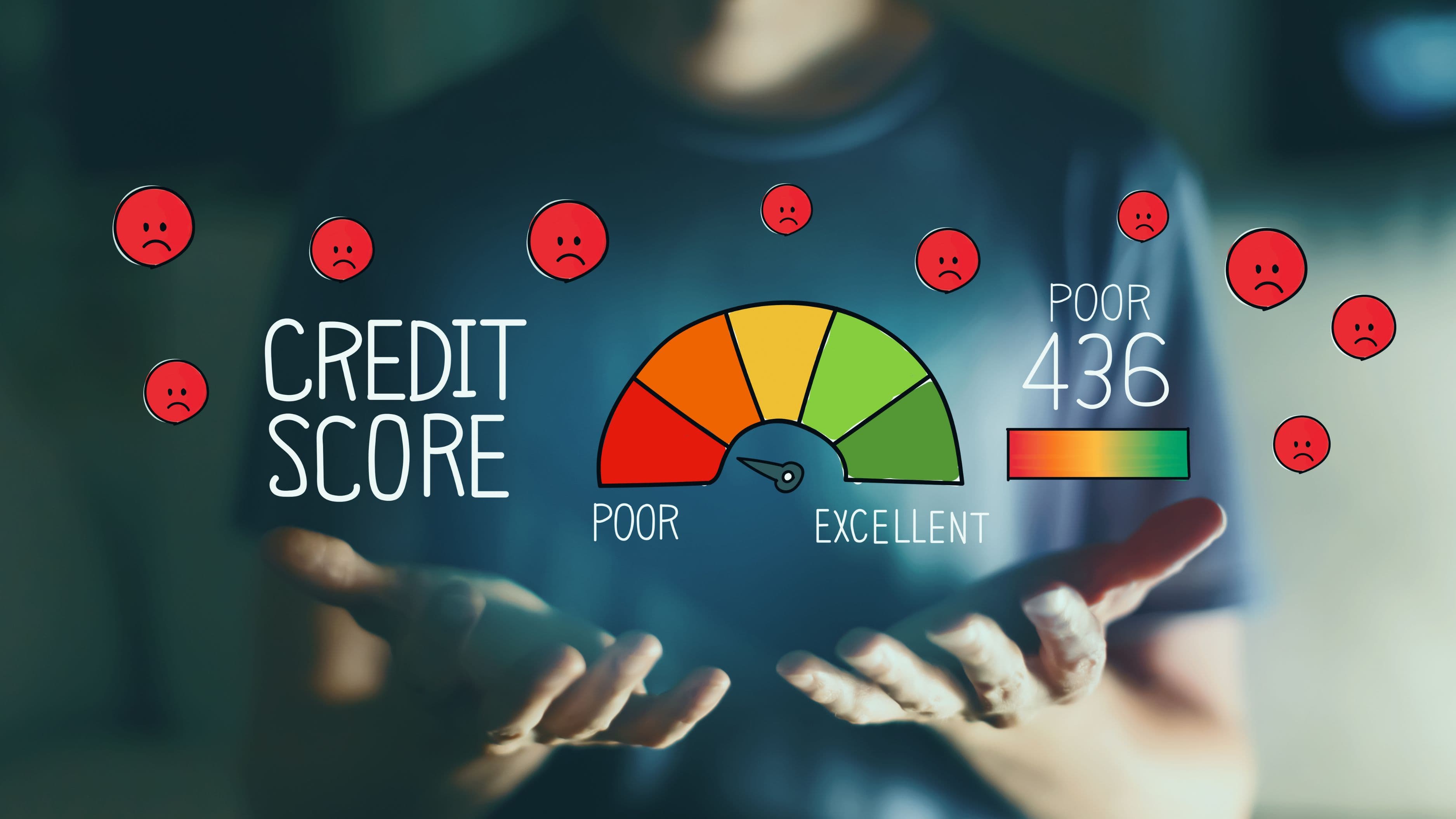
What Is an AI-Powered Credit Score Simulator and How Accurate Is It?
You've probably wondered what would happen to your credit score if you paid off a credit card, opened a new account, or missed a payment. Credit score simulators promise to answer exactly that question – without you having to actually do any of those things first. And now a growing number of them claim to be powered by AI, suggesting they're smarter and more precise than the older versions.

What Is an AI-Powered Savings Account and How Does It Work?
Most savings accounts do one thing: hold your money and pay a little interest. What they don't do is notice that you've had three unusually low-spend weeks and could quietly move $80 into savings without you feeling it. They don't warn you that a large bill is due in six days before they transfer anything. And they don't learn that you tend to overspend in the two weeks after payday and adjust accordingly.
Explore other categories
Same editorial standard, different decisions.

AI-Powered Investing
Markets, portfolios, and research through an AI lens.
Browse AI-Powered Investing
Emerging Fintech & Blockchain
Payments, crypto rails, and the next wave of financial infrastructure.
Browse Emerging Fintech & Blockchain
More on AI Finance Edge
Extra reads across tech, money, and the wider finance beat.
Browse More on AI Finance Edge
Risk, Fraud & Compliance
Fraud signals, bank risk, and how compliance teams keep up.
Browse Risk, Fraud & Compliance
Smart Tax & Accounting
Tax, audits, and accounting workflows getting faster with AI.
Browse Smart Tax & Accounting