


Understanding Layer 2 doesn't require a computer science degree. The core idea is simple, the real-world implications are significant, and it's already affecting how financial applications are being built right now.
The Problem Layer 2 Is Solving
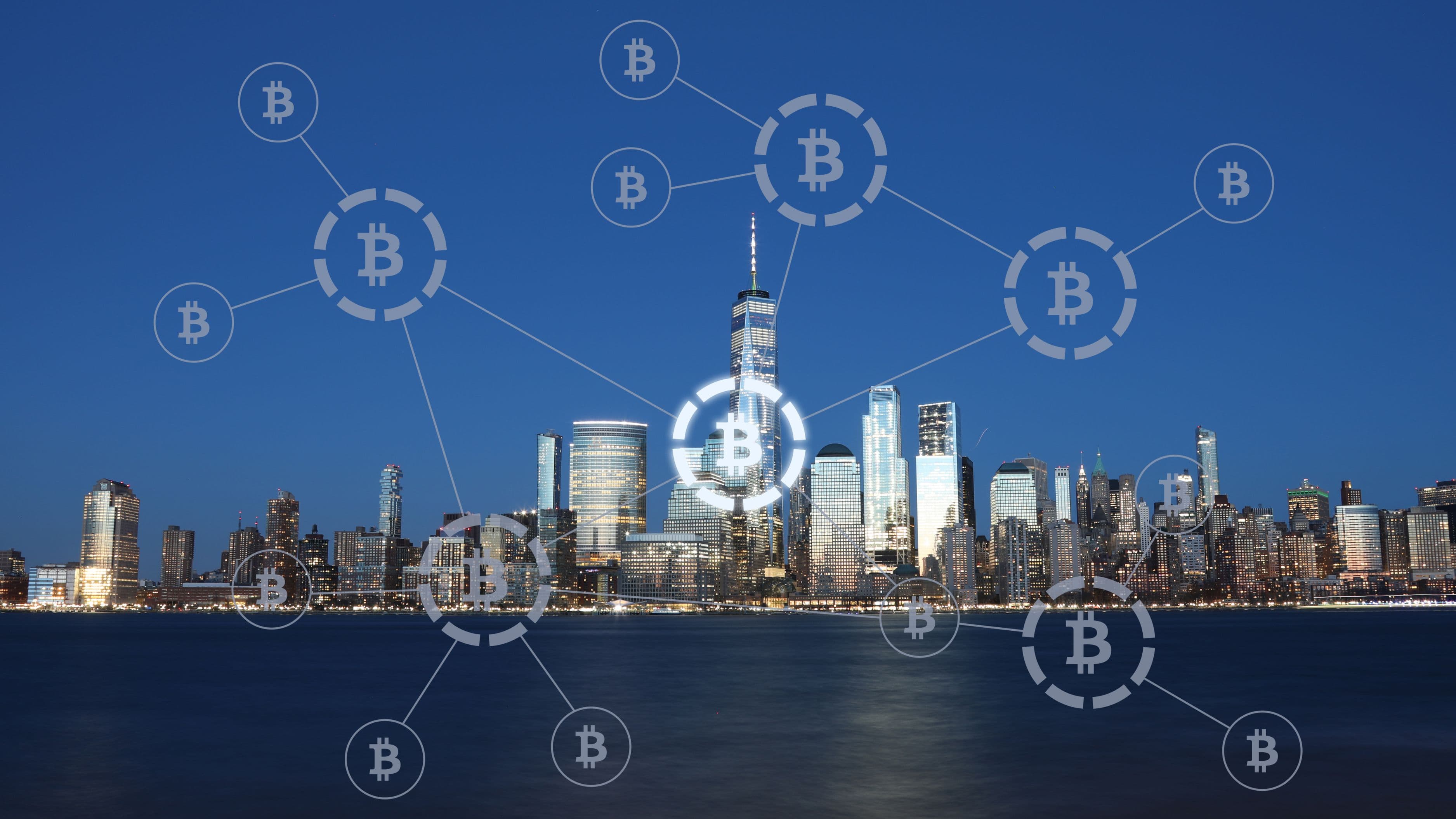
To understand Layer 2, you need to briefly understand what Layer 1 is. Layer 1 is the base blockchain itself – Ethereum, Bitcoin, Solana. It's where all transactions are ultimately recorded and verified by a decentralized network of computers. That verification process is what makes the blockchain trustworthy: no single party controls it, and transactions once recorded can't be altered.
The trade-off is throughput. Ethereum's base layer processes roughly 15 to 30 transactions per second. For context, Visa processes tens of thousands per second. When demand spikes on Ethereum – during a popular NFT launch, a market surge, or heavy DeFi activity – users compete to get their transactions processed, driving up fees dramatically. The network doesn't crash; it just gets expensive and slow. That's a fundamental scalability problem, and it's the main reason blockchain hasn't replaced traditional financial infrastructure at scale yet.
Layer 2 networks sit on top of Layer 1. They process transactions off the main chain, bundle them up, and periodically settle the results back to Layer 1. The analogy that tends to land: imagine a busy highway (Layer 1) and an express lane built alongside it (Layer 2). Most of the daily traffic moves through the express lane faster and cheaper, while the highway itself handles final verification and security. You still end up on the same destination; you just got there more efficiently.
How Layer 2 Actually Works
There are a few different technical approaches to Layer 2, and they're worth knowing at a basic level because they carry different trade-offs in finance.
Rollups are the dominant Layer 2 approach on Ethereum and the most relevant for financial applications. A rollup takes a large batch of transactions, processes them off-chain, compresses them into a summary, and posts that summary to the Ethereum mainnet. Instead of recording 10,000 individual transactions on-chain, the rollup records a compressed proof that 10,000 transactions occurred and were valid. This dramatically reduces the data and cost burden on the base layer.
There are two main types of rollups. Optimistic rollups (like Arbitrum and Optimism) assume transactions are valid by default and only run a verification check if someone challenges one – which is efficient but introduces a waiting period before funds can be moved back to Layer 1. ZK rollups (like zkSync and StarkNet) use cryptographic proofs to validate transactions mathematically before posting them, which is faster to finalize but more computationally complex. For finance, ZK rollups are increasingly favored because faster finality – the certainty that a transaction is irreversible – is critical when real money is moving.
State channels take a different approach. Two parties open a channel on-chain, conduct many transactions between themselves off-chain, and then close the channel on-chain with the final balance. Bitcoin's Lightning Network works this way. For high-frequency, bilateral payments – think micropayments for streaming services or instant back-and-forth between two parties – state channels are extremely efficient. For more general financial applications involving many parties, rollups are more flexible.
Why This Matters for Finance Specifically
The scalability problem that Layer 2 solves isn't just a technical nuisance – it's the main bottleneck preventing blockchain infrastructure from competing with traditional financial systems at scale. Here's where that matters in practice.
Payments and remittances. Sending money internationally through the traditional banking system is slow and expensive, often taking 2 to 5 business days and extracting 5 to 10 percent in fees. Stablecoin payments on Layer 2 networks can settle in seconds for fractions of a cent. Startups and established fintechs are already building remittance products on Layer 2 rails, targeting corridors where traditional banking is expensive or inaccessible.
Decentralized finance (DeFi). DeFi applications – decentralized lending, borrowing, trading, and yield generation – have operated primarily on Ethereum's base layer, which made them prohibitively expensive for small transactions. Layer 2 reduces gas fees enough that DeFi becomes practical for everyday users, not just large capital deployments. Platforms like Aave and Uniswap have deployed on multiple Layer 2 networks specifically to serve users who couldn't justify base-layer costs.
Tokenized assets. The tokenized real estate, bond, and fund products being built by institutions require high transaction volumes with low friction. A tokenized fund that settles investor purchases and income distributions on Ethereum's base layer at $20–$50 per transaction is commercially unworkable at scale. On Layer 2, those same transactions cost fractions of a cent. This is one reason why asset managers building tokenized products are increasingly doing so on Layer 2 infrastructure.
Central bank digital currencies (CBDCs). Several central banks actively exploring blockchain-based digital currencies are looking at Layer 2 architectures to handle retail transaction volumes. The European Central Bank's digital euro research and projects tied to Brazil's DREX platform both involve exploring Layer 2 solutions that can scale to the transaction volumes of a national payment system while maintaining the security guarantees of a base-layer blockchain.
Real-World Examples Already Operating
Layer 2 networks aren't hypothetical. Arbitrum and Optimism together process more transactions daily than the Ethereum base layer itself. Coinbase built its own Layer 2 network called Base, which has attracted hundreds of applications and processes millions of transactions per day. Visa has run pilots settling USDC stablecoin payments on Solana and Ethereum Layer 2 networks. PayPal launched its PYUSD stablecoin on Ethereum and has indicated interest in Layer 2 compatibility for scale.
On the institutional side, JPMorgan's Onyx platform – which handles tokenized assets and interbank settlements – uses permissioned blockchain infrastructure that operates on similar principles to Layer 2 scaling. The Bank for International Settlements has run multiple "Project" experiments (Project Mariana, Project mBridge) exploring how Layer 2 architecture could enable faster cross-border settlement between central banks.
These examples don't all carry the same risk profile or the same level of decentralization. A corporate Layer 2 built by Coinbase is structurally different from a permissionless rollup anyone can use. But they share the core proposition: faster, cheaper transaction processing built on top of more secure base-layer settlement.
The Risks and Limitations Worth Knowing
Layer 2 reduces cost and increases speed, but it introduces its own set of trade-offs that matter for anyone thinking about finance on these networks.
Security dependencies. Layer 2 networks inherit their ultimate security from the base layer they settle to – but in the interim period before settlement happens, you're trusting the Layer 2 system's own security. If a Layer 2 network is compromised, funds can be at risk before the final settlement to Layer 1 occurs. Several high-profile bridge hacks (bridges are the mechanisms that move assets between Layer 1 and Layer 2) have resulted in hundreds of millions of dollars in losses. The bridge infrastructure, not the Layer 2 itself, has been the most common attack surface.
Fragmentation. The proliferation of Layer 2 networks creates a fragmented ecosystem. Liquidity and users spread across Arbitrum, Optimism, Base, zkSync, StarkNet, and others, which reduces the network effects that make any single ecosystem powerful. Moving assets between Layer 2 networks still requires bridging, which carries its own fees and risks.
Centralization trade-offs. Many current Layer 2 networks, including some of the most popular ones, rely on a small number of operators to sequence and batch transactions. This creates centralization risk that undermines some of the decentralization arguments for blockchain in the first place. The path toward more decentralized Layer 2 operation is a work in progress for most networks.
Regulatory uncertainty. The regulatory status of assets and transactions on Layer 2 networks follows the same uncertainty as broader crypto regulation. Clarity is developing in some jurisdictions and stalled in others, which creates compliance complexity for financial institutions wanting to build on this infrastructure.
What to Watch Next
The most significant near-term development in Layer 2 is the maturation of ZK rollup technology. As ZK proof generation becomes faster and cheaper, the security-and-speed combination it offers makes it increasingly attractive for institutional financial applications where finality matters. Ethereum's own roadmap includes upgrades specifically designed to make Layer 2 even more efficient, in a strategy the Ethereum Foundation calls "rollup-centric."
The convergence of Layer 2 infrastructure with stablecoins and tokenized traditional assets is where the most interesting financial applications are being built. When a tokenized treasury bill can be purchased, transferred, and used as collateral in a lending protocol – all within seconds and for a fraction of a cent in fees – the gap between traditional finance and blockchain-based finance starts to close in a practical way.
For everyday financial users, the most relevant near-term implication is lower-cost stablecoin payments and expanding access to DeFi applications that were previously too expensive to use at small scale. You may not interact with Layer 2 directly or know you're using it – just as most people don't know which server infrastructure powers their banking app – but it's increasingly the layer that makes the experience possible.
FAQ
Is Layer 2 safe to use? Established Layer 2 networks like Arbitrum, Optimism, and Base have processed billions of dollars in transactions and have strong security track records. The primary risk area has been bridges – the mechanisms used to move assets between networks. Using well-audited, established bridges and avoiding newer, unaudited protocols reduces this risk significantly. No blockchain infrastructure is risk-free, and you should only hold assets in crypto environments you understand.
Do I need to do anything differently to use Layer 2? In many cases, no – applications built on Layer 2 handle the infrastructure invisibly. If you're using a wallet like MetaMask to interact with Layer 2 networks directly, you'll add the network to your wallet and ensure you have the right assets on the right network. Most major wallets support the leading Layer 2 networks natively now.
Will Layer 2 replace Layer 1 blockchains? No. Layer 2 depends on Layer 1 for its security and final settlement. The relationship is complementary, not competitive. Layer 1 blockchains serve as the trust anchor; Layer 2 networks handle the volume. The Ethereum roadmap explicitly envisions this division of labor as its long-term architecture.
How does Layer 2 affect cryptocurrency prices? Layer 2 activity affects the demand for the base-layer currency used for settlement. On Ethereum, Layer 2 networks still pay fees in ETH for their periodic settlements to mainnet, which maintains some demand for the base currency. The relationship between Layer 2 growth and token price is complex and not linear, and shouldn't be treated as an investment thesis.
Which Layer 2 networks are the most established? Arbitrum and Optimism are the largest optimistic rollups by total value locked and transaction volume. Base (built by Coinbase) has grown rapidly since its 2023 launch. zkSync and StarkNet are the leading ZK rollup networks. Polygon has its own ecosystem of scaling solutions and significant institutional partnerships. All of these have been operating for at least one to two years with meaningful transaction histories.
📚 Sources
Ethereum Foundation – Layer 2 Rollups Explained: https://ethereum.org/en/layer-2/
Arbitrum – How Arbitrum Works: https://docs.arbitrum.io/why-nitro
Visa – Crypto and Blockchain Research Insights: https://usa.visa.com/solutions/crypto/deep-dive-on-solana.html
Bank for International Settlements – Project Mariana: Cross-Border Exchange Using DeFi: https://www.bis.org/publ/work1104.htm
Coinbase – Base Network Overview: https://base.org/
World Economic Forum – DeFi Policy-Maker Toolkit: https://www.weforum.org/publications/decentralized-finance-defi-policy-maker-toolkit/