Banks are now using more sophisticated approaches – driven by machine learning and alternative data – to try to build a more accurate picture of who is actually a good credit risk. The results are genuinely promising in some ways, and genuinely complicated in others.
What's Wrong With the Old Model
The traditional credit scoring model works by looking backwards. It takes your documented history of borrowing and repaying – credit cards, auto loans, student loans, mortgages – and uses that track record to estimate your future behavior. The logic is reasonable, but it has a blind spot: it can only assess people who already have a credit history to look at.
This creates what's sometimes called the "credit catch-22." To get credit, you need a credit history. To have a credit history, you need credit. Young adults, recent immigrants, people who have primarily used cash or prepaid cards, and anyone whose financial life doesn't fit neatly into the traditional credit product box all struggle with this. By some estimates, more than 40 million Americans are "credit invisible" or have files too thin to generate a reliable FICO score at all. For these people, the old model doesn't produce a fairer answer – it produces no answer.
Even for people with established credit histories, traditional models often reduce complex financial behavior to a single number that doesn't distinguish between someone who carries a high balance because they're in financial distress and someone who does so because they pay it off in full each month on a high-spend card.
How Machine Learning Changes the Calculation
Machine learning credit models work differently from traditional scoring in two significant ways: they can handle more variables simultaneously, and they can identify patterns in data that human analysts might not have thought to look for.
A traditional credit model might use 15–20 variables. A machine learning model might use hundreds – or in some cases, thousands. These additional variables often come from what's called alternative data: information that isn't captured in a standard credit file but may still be predictive of financial behavior. Examples include how consistently someone pays their rent or utilities, their checking account cash flow patterns, how much they spend and when (even without traditional credit), and in some implementations, behavioral signals from how a person interacts with a banking app.
The principle behind this is straightforward. If someone has paid their phone bill on time every month for five years, that pattern tells you something useful about their likelihood of repaying a credit card – even if no bank has ever formally given them credit to track. By incorporating that kind of data, lenders can extend fairer assessments to people who have been invisible to traditional models.
Fintech lenders like Upstart pioneered much of this approach and have since been joined by larger institutions. Upstart, which partners with banks and credit unions to power lending decisions, uses machine learning models that the company says are designed to predict actual default rates more accurately than FICO alone – allowing them to approve more borrowers at competitive rates without taking on more risk.
What "Fairer" Actually Means in Practice
The word "fairer" in this context means a few different things, and it's worth being precise about them.
The first is fairness as accuracy: the model is more accurate at predicting who will actually repay their debt, which means fewer people are incorrectly declined or assigned low limits they don't need. If a machine learning model can correctly identify that someone with a thin credit file is actually a low-risk borrower, giving them a credit limit that reflects their real capacity is fairer than defaulting to the lowest tier.
The second is fairness as inclusivity: people who were previously excluded from the credit system entirely – because they lacked the file thickness required for a traditional score – can now be assessed on the basis of alternative data that reflects their actual financial behavior. This is the argument that companies like Upstart and also credit bureaus like Experian (with its Experian Boost product) make most forcefully.
The third, and most contested, is fairness as equal treatment across demographic groups. This is where the picture gets more complicated.
The Fairness Problem Machine Learning Doesn't Automatically Solve
There is a temptation to assume that because machine learning models are more sophisticated and use more data than traditional models, they must be less biased. This assumption is incorrect, and regulators have been clear about it.
Machine learning models learn from historical data. If that historical data reflects decades of discriminatory lending practices – which it does, because lending discrimination in the United States has a long and well-documented history – then a model trained on that data can reproduce or even amplify those disparities without anyone deliberately programming it to do so.
The use of alternative data introduces its own complications. Zip code, for example, is highly predictive of financial behavior in some models, but it's also closely correlated with race due to the legacy of redlining and residential segregation. Using zip code as a variable in a credit model may improve accuracy while simultaneously producing outcomes that disparately affect certain racial groups – a violation of the Equal Credit Opportunity Act (ECOA) even if no discriminatory intent was present.
The Consumer Financial Protection Bureau (CFPB) and the Federal Reserve have both flagged this issue explicitly. The CFPB's guidance on algorithmic credit decisions makes clear that using a machine learning model doesn't insulate a lender from fair lending obligations – lenders are still required to be able to explain their decisions and demonstrate that their models don't produce illegal disparate impact. This is a genuine technical challenge, because some of the most accurate machine learning models are also the hardest to interpret – a characteristic researchers call being a "black box."
What Explainability Requirements Mean for Borrowers
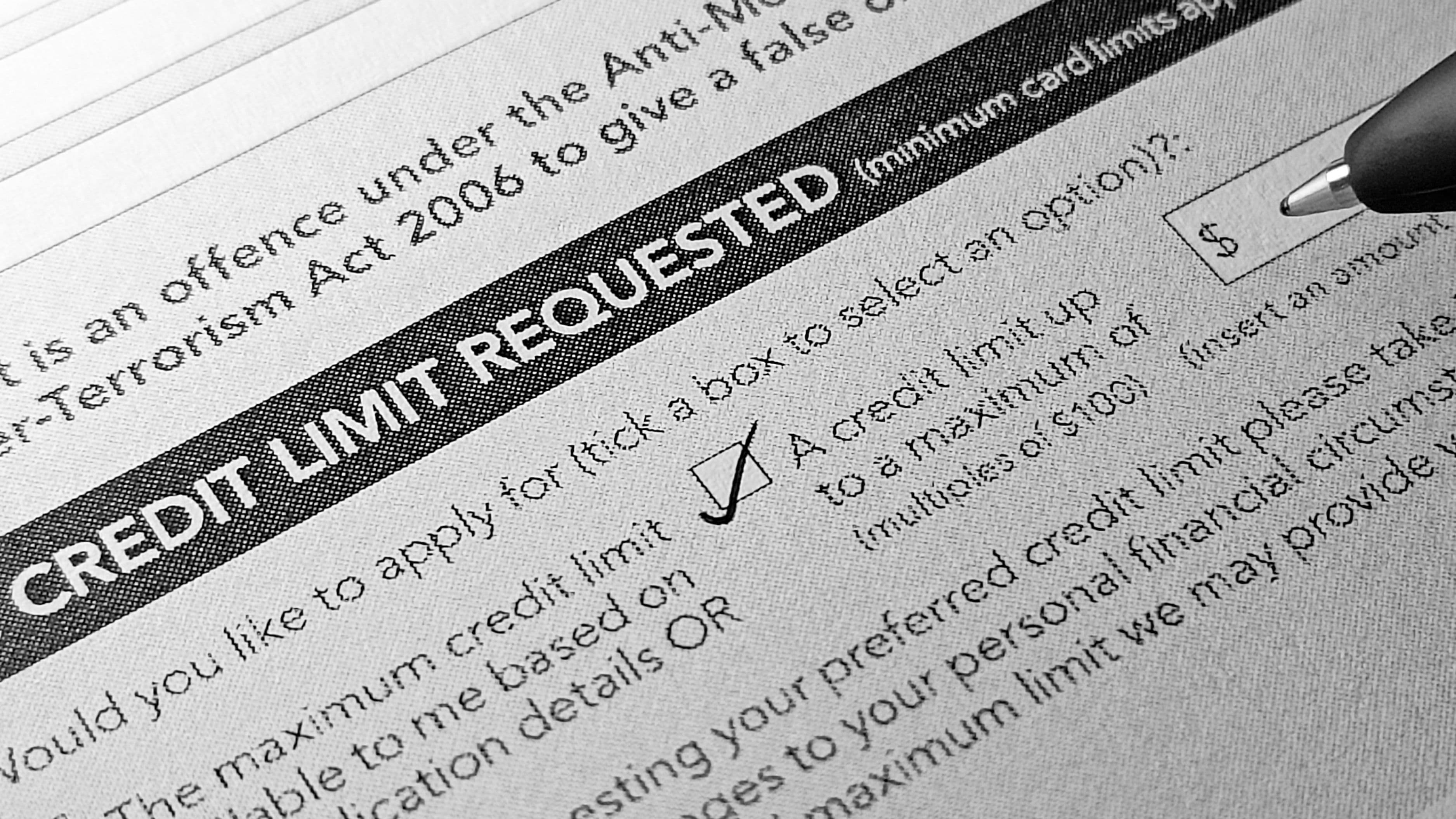
The regulatory push for explainability in algorithmic credit decisions has a direct impact on what banks and lenders can and can't do with machine learning. Under the ECOA and the Fair Credit Reporting Act, lenders are required to provide "adverse action notices" – specific reasons why a credit application was declined or why a credit limit was set lower than requested. These reasons must be understandable to the applicant, not just technically accurate from the model's perspective.
This creates a real tension. A machine learning model that uses 500 variables and identifies complex interactions between them may be genuinely more accurate than a simpler model, but it may also be genuinely harder to explain in plain language. Banks operating in this space have to balance model performance with the ability to communicate decisions clearly and comply with regulatory requirements.
Some institutions have responded by using machine learning models to generate a ranked list of the most influential factors in a given decision – essentially finding the variables that pushed the outcome most strongly – and using those to populate the required adverse action explanation. This is an imperfect solution, because it translates a complex, multi-variable interaction into a simplified list, but it represents the current practical approach to the explainability problem.
Real-World Examples of AI Credit Models in Action
Upstart's lending model is the most publicly discussed example in the US. The company reports that its model approves roughly 43% more borrowers than traditional models would, with an average APR about 38% lower for approved borrowers – numbers it attributes to more accurate default prediction. Independent research has found mixed results on the bias question, with some analyses suggesting Upstart's model may still produce racial disparities, though the company disputes some of those findings. The CFPB has also previously issued Upstart a no-action letter indicating it was evaluating the model for fair lending compliance, though the terms of that arrangement have since changed.
Capital One and other large card issuers have used machine learning to power real-time credit limit adjustments – automatically increasing limits for customers who demonstrate consistent payment behavior, rather than requiring them to request a review. This kind of dynamic adjustment is only possible at scale with automated modeling.
On the consumer side, products like Experian Boost allow individuals to voluntarily contribute alternative data – utility and phone bill payment history – to their Experian credit file, which can then be incorporated into scores and lender decisions. This is an opt-in, consumer-controlled version of the alternative data approach, and it's meaningfully different from a lender unilaterally mining third-party data sources.
What This Means for You
If you've ever been assigned a credit limit that felt disconnected from your actual financial picture, there's a reasonable chance a newer generation of lenders – particularly fintechs and neobanks – would assess you differently. If you have a thin credit file, looking for lenders that explicitly use alternative data or cash flow underwriting is worth doing. Checking whether products like Experian Boost could improve your accessible credit profile is a no-cost first step.
If you've been declined credit and the adverse action notice was vague or confusing, you have the right under the ECOA to request a more specific explanation. Exercising that right occasionally prompts a more useful answer than the generic letter provides.
And if you're evaluating a fintech lender's offer that seems unusually accessible or favorable compared to what you've seen from traditional banks, read the full terms carefully. The same models that can extend credit more fairly can also price it differently, and the APR matters more than the approval.
FAQ
Does using alternative data always lead to better credit access? Not automatically. Alternative data can help lenders better assess people with thin files, but the quality and type of data matters enormously. Positive rent payment history incorporated through a service like Rental Kharma or Experian RentBureau can help. Less transparent uses of behavioral or social data raise more concern. The benefit depends heavily on what data is being used and how.
Can I see the AI model that was used to make a decision about my credit? Not directly. Lenders are not required to share their models, which are proprietary. But under the ECOA and Fair Credit Reporting Act, they are required to provide specific reasons for adverse decisions, and you can request your credit report for free to understand what information is being used.
Are machine learning credit models regulated? Yes. Lenders using machine learning models are subject to the same fair lending laws as those using traditional models – including the Equal Credit Opportunity Act, the Fair Housing Act, and Fair Credit Reporting Act requirements. The CFPB and federal banking regulators have increased scrutiny of algorithmic lending practices specifically.
What is "disparate impact" in lending? Disparate impact refers to a lending practice or model that, even without discriminatory intent, produces outcomes that disproportionately harm a protected group – such as approving fewer applicants from certain racial groups. It's illegal under the ECOA even when the lender has no conscious bias. Proving or disproving disparate impact in machine learning models is an active area of both regulatory enforcement and academic research.
Should I prefer a fintech lender using AI models over a traditional bank? Not necessarily based on AI use alone. The model is one factor; the APR, fee structure, credit limit terms, and the institution's regulatory standing matter equally. Fintech lenders with AI-driven underwriting can offer genuinely better access and terms for some borrowers – but the loan terms are still the thing you're agreeing to, regardless of what generated the offer.
📚 Sources
Consumer Financial Protection Bureau – Fair Lending and Machine Learning: https://www.consumerfinance.gov/about-us/blog/cfpb-issues-guidance-on-credit-denials-by-lenders-using-artificial-intelligence/
Federal Reserve – Artificial Intelligence and Machine Learning in Financial Services: https://www.federalreserve.gov/econres/feds/files/2022046pap.pdf
Upstart – How Upstart Works: https://www.upstart.com/about
Experian – Experian Boost Overview: https://www.experian.com/consumer-products/score-boost.html
Urban Institute – Credit Invisibles and the Credit Access Problem: https://www.urban.org/research/publication/credit-invisibles