The short answer is: kind of, sometimes, under specific conditions – but not in the way most people imagine. And understanding what AI can and can't do here matters directly for how you think about your investments.
What "Predicting a Crash" Actually Means
Before getting into what AI can do, it helps to be clear about what "predicting a crash" actually involves, because the bar is harder to clear than it sounds.
A true prediction isn't just saying "the market seems overheated" or "a correction might be coming." That's commentary any analyst can make. A useful prediction means identifying, with enough advance notice and specificity, that a significant drop is about to happen – so that you can act on it before it does. That means getting the timing right, not just the direction. Plenty of analysts predicted a housing bubble for years before 2008. The ones who made money on the prediction did so because they also figured out when it would collapse.
Markets are extraordinarily complex systems. They don't just reflect economic data – they reflect human psychology, geopolitical events, policy decisions, and the collective behavior of millions of participants who are all trying to outsmart each other at the same time. Predicting a crash means predicting when fear, leverage, and cascading failures will combine to produce a sharp, rapid decline. That's not a data problem in the normal sense – it's a behavioral and systemic one.
What AI Is Actually Good At in Market Analysis
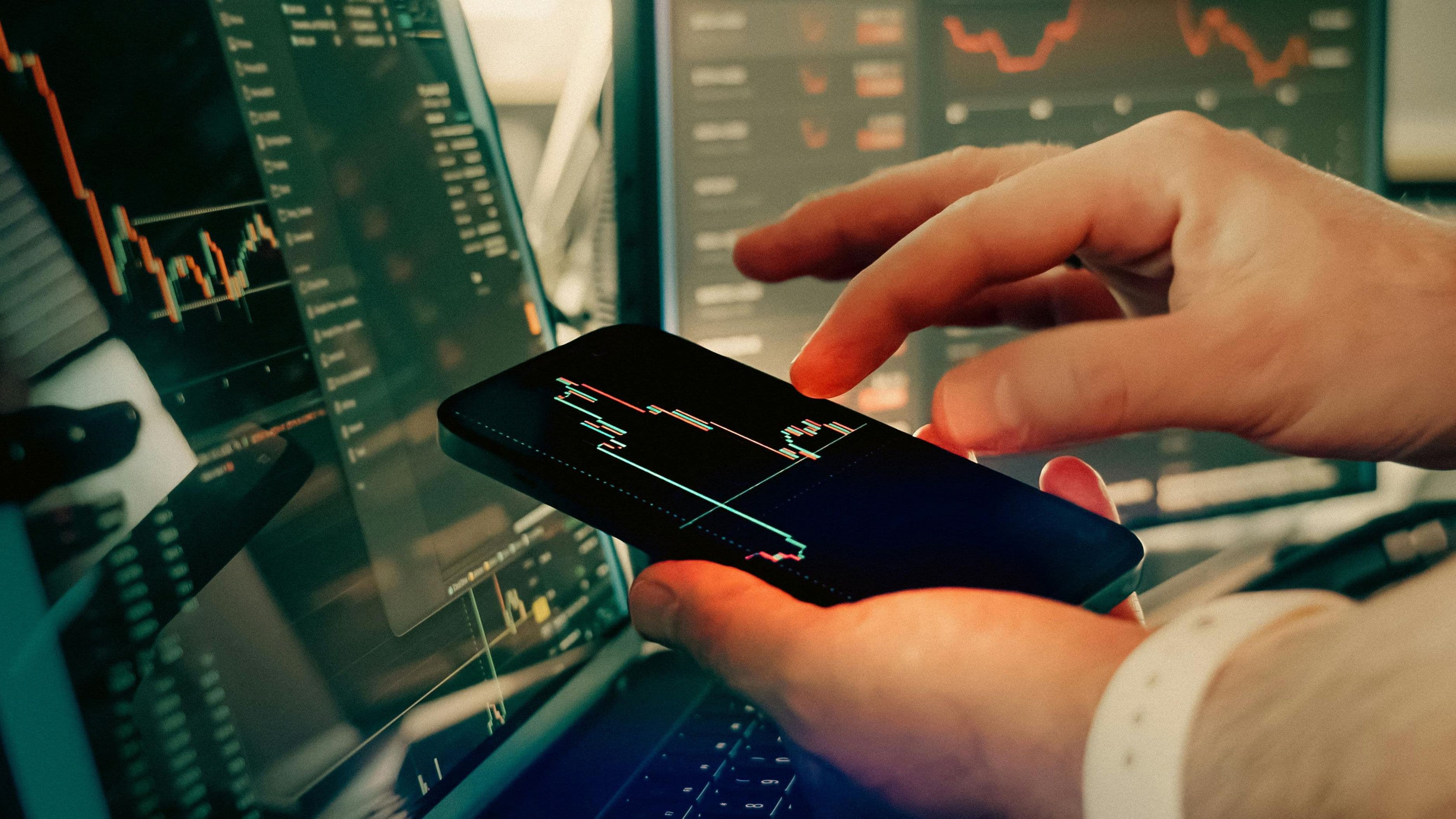
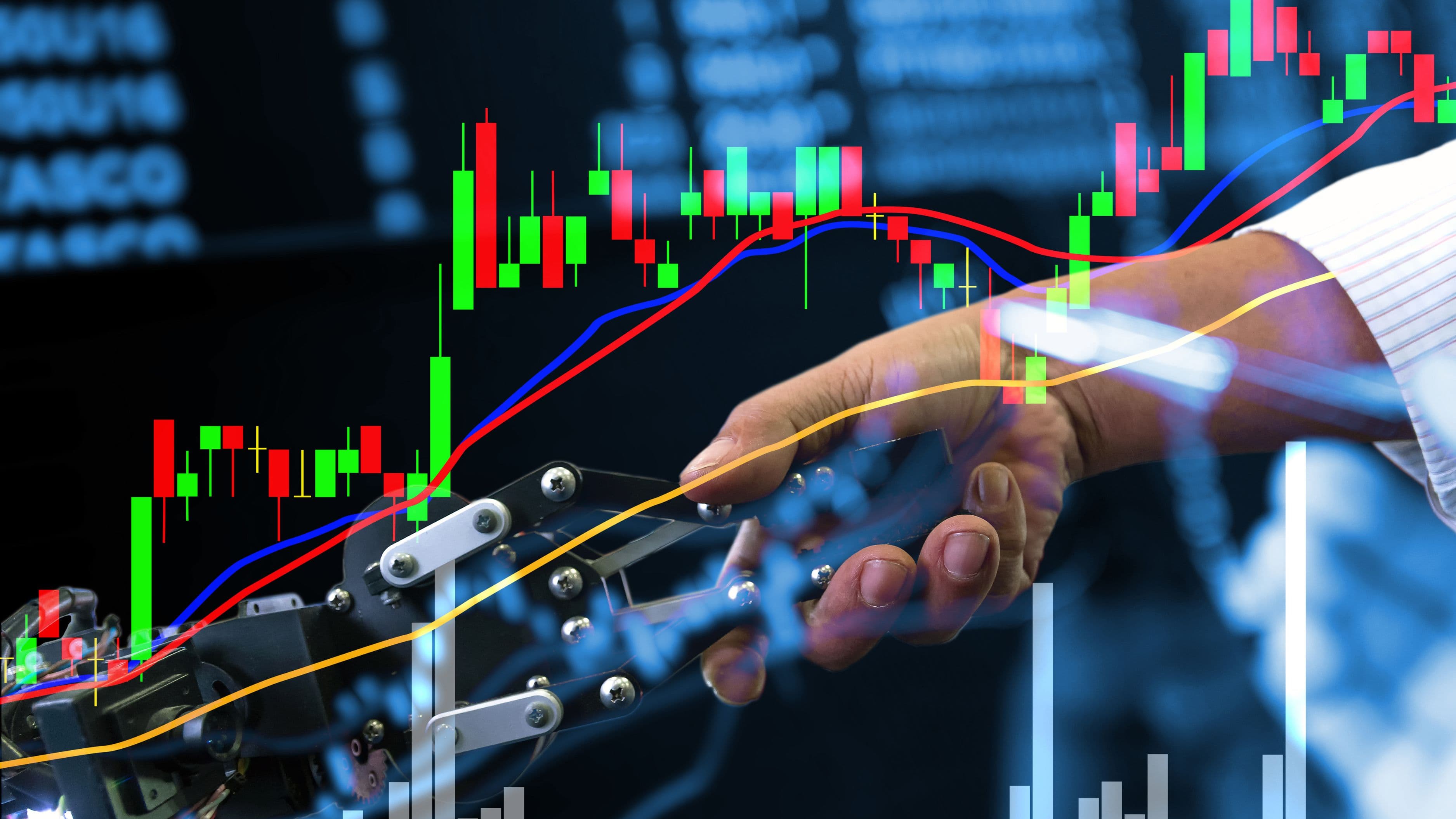
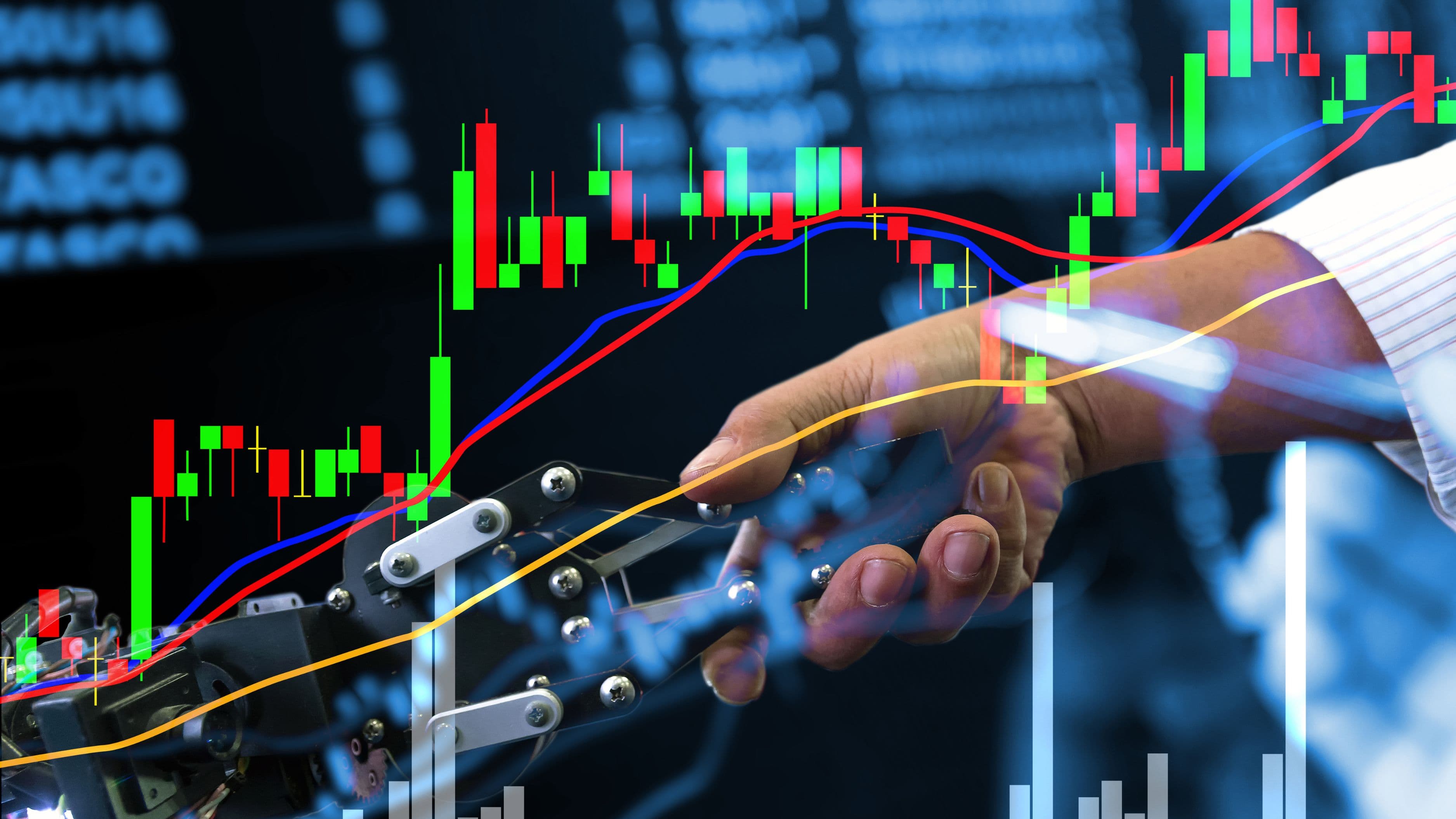
AI systems – particularly machine learning models – are genuinely powerful at a specific set of tasks that are relevant to understanding market risk. They can process vast quantities of structured data (price history, trading volume, earnings reports, economic indicators) and unstructured data (news articles, earnings call transcripts, social media sentiment) simultaneously and identify patterns that no human analyst would realistically spot across that volume.
This matters in practice. Sentiment analysis models can scan thousands of news sources and financial reports in real time and detect shifts in market tone before they show up in price movements. Anomaly detection systems can flag unusual trading patterns – sudden volume spikes, abnormal correlations between asset classes, or derivatives positioning that historically precedes stress events. Natural language processing tools can parse Federal Reserve statements and earnings calls to detect language shifts that signal caution or concern before the official message is widely absorbed.
JP Morgan, BlackRock, and a number of major hedge funds have deployed machine learning systems that do exactly this kind of real-time signal detection. Renaissance Technologies, the quantitative hedge fund often cited as the most successful in history, has used systematic data-driven models for decades – though the specifics of their approach are closely guarded. These systems don't predict crashes in isolation; they monitor a wide range of leading indicators and adjust portfolio positioning based on what those signals suggest about near-term risk.
The important distinction is that these systems are risk monitors more than crash predictors. They get better at warning of elevated risk conditions – and that's genuinely useful, even if it's not the same as knowing that Thursday is the day everything falls.
The Evidence: What AI Has and Hasn't Predicted
There are real examples of AI systems detecting early warning signals before major market events. Research published by the Bank for International Settlements and various academic institutions has found that machine learning models outperform traditional statistical models in predicting financial distress signals – identifying credit stress, liquidity tightening, and volatility clustering before they become crises. Some models analyzed ahead of the 2020 COVID crash showed significant deterioration in credit market signals weeks before the bottom fell out of equity markets in March.
But the track record is uneven. No AI system publicly predicted the specific timing and severity of the 2008 financial crisis. The models that existed at the time – and there were sophisticated ones at the major banks – either missed it, underweighted the systemic risk building in mortgage derivatives, or were deliberately ignored by institutions that had financial incentives to keep the party going. The failure in 2008 wasn't purely a modeling failure. It was a governance and incentive failure that happened to also involve bad models.
The COVID crash of March 2020 is an even cleaner test case: it was triggered by a truly novel exogenous shock – a global pandemic – that no historical data set had any real precedent for. Machine learning models trained on prior market behavior had no way to predict an event that had never happened before in the modern financial system. The models did a better job identifying when the market was becoming more fragile in early 2020, but the specific trigger was unknowable.
This points to a fundamental constraint that no amount of computational power fully resolves: AI models learn from historical data. They're very good at recognizing patterns that have occurred before. They're structurally limited in predicting crises that stem from genuinely novel causes.
The Problem No Model Has Fully Solved
There are a few specific challenges that make market crash prediction harder for AI than it might appear.
The first is reflexivity. When sophisticated investors know that a particular indicator has historically preceded crashes, they start acting on that indicator earlier – which changes the indicator's behavior. The market adapts to predictive models, making those models less reliable over time. This is sometimes called the Goodhart's Law problem in financial contexts: once a measure becomes a target, it stops being a reliable measure. AI models trained on historical patterns face this constantly in live markets.
The second is the data gap around rare events. Serious market crashes are, by definition, rare. The S&P 500 has experienced relatively few genuine crashes in its history. Machine learning models need large amounts of training data to identify patterns reliably. When the event you're trying to predict only happens a handful of times in a century, you have a sample size problem that no algorithm can fully compensate for.
The third is systemic interconnection. Modern financial markets are deeply interconnected globally – stress in one market or asset class can propagate in ways that depend on the specific structure of leverage, counterparty relationships, and regulatory responses at any given moment. These structural details change constantly and aren't fully captured in price and volume data. The 2008 crisis spread as fast as it did partly because of specific contractual structures in CDOs and credit default swaps that weren't fully transparent even to the institutions that held them.
What This Means for You as an Investor
You're unlikely to get access to the same AI risk monitoring tools used by institutional investors at JP Morgan or BlackRock. But the broader takeaway is more useful than any specific prediction anyway.
What AI-driven analysis increasingly shows is that market risk tends to build in recognizable ways before it explodes. Credit spreads widen, volatility rises, correlations between asset classes shift, sentiment turns. These are detectable signals, and they're increasingly being integrated into retail investment platforms and financial planning tools in simplified form. If your investment platform shows a "market risk" indicator or a volatility dashboard, it's pulling on some version of these analytical approaches.
The more practical implication is this: the goal of AI in market risk management isn't to predict the exact date of the next crash so you can move everything to cash the day before. That level of precision doesn't exist for anyone. The goal is to help you understand whether current market conditions look historically elevated in risk, so you can make considered decisions about your portfolio's resilience – adjusting allocations, reviewing your risk tolerance, or simply understanding that staying invested through volatility has historically been the right call for long-term investors.
Diversification, appropriate asset allocation for your time horizon, and avoiding the temptation to make dramatic moves based on short-term signals remain the most reliably sound behaviors for individual investors. AI tools can inform that framework better than ever. They can't replace it with a crystal ball.
What to Watch Going Forward
The field is advancing quickly. Newer approaches – combining economic network analysis, alternative data sources like satellite imagery and shipping data, and more sophisticated behavioral modeling – are improving the signal quality available to institutional risk systems. Some academic research is showing early promise in identifying systemic fragility ahead of stress events with more precision than earlier models.
A few areas worth watching if you follow this space: the growing use of "explainable AI" in financial risk management, which aims to make model outputs more interpretable and accountable; regulatory interest in how AI is being used in risk assessment by major financial institutions; and the gradual integration of more sophisticated risk dashboards into consumer investment apps and robo-advisors.
The honest trajectory is that AI will get better at this – not at predicting crashes with certainty, but at identifying when the conditions for a crash are building, and communicating that risk more clearly. That's still a meaningful improvement over the status quo. It just isn't a guarantee.
FAQ
Has any AI system ever successfully predicted a major market crash? Some systems have detected elevated risk and deteriorating conditions ahead of major events – the 2020 COVID crash saw credit market signals worsen weeks before the equity selloff. But no system has publicly demonstrated consistent, specific crash prediction with enough advance warning and precision to act on reliably. The record is better described as "early warning of stress conditions" than "crash prediction."
Do hedge funds use AI to predict crashes? Major quantitative hedge funds – Renaissance Technologies, Two Sigma, D.E. Shaw – use sophisticated machine learning and statistical models to trade systematically and manage risk. These models monitor signals across many data sources and adjust exposure based on risk conditions. Whether this constitutes "crash prediction" depends on how you define the term, but it's closer to dynamic risk management than point-in-time prediction.
Should I use AI-powered investing apps to guide my crash protection strategy? Some retail apps offer AI-based risk indicators, portfolio stress tests, or volatility alerts that can be useful as one input in your decision-making. The key is treating them as one signal among many, not as a reliable crash-timing tool. No consumer app has the analytical firepower of institutional risk systems, and even institutional systems haven't solved the crash prediction problem definitively.
Why can't more data just solve this problem? More data helps but doesn't fully resolve the core challenge. The events that trigger crashes often include unprecedented elements – policy decisions, geopolitical shocks, pandemics – that historical data doesn't adequately represent. And the reflexivity problem means that widely known predictive signals get traded away as soon as they become established. There are fundamental limits to what pattern recognition in historical data can tell you about genuinely novel future events.
What's the most useful thing AI does in financial risk management today? The most practically impactful use is real-time monitoring of systemic risk indicators – credit spreads, volatility surfaces, cross-asset correlations, sentiment shifts – and flagging when conditions are deteriorating. This gives institutional risk managers earlier warning and more nuanced picture of risk than traditional models. It improves the speed and quality of risk assessment without replacing human judgment about what to do with that assessment.
Wrapping Up
AI is genuinely changing how financial risk is monitored and managed. The tools available today – for institutions and, increasingly, for everyday investors – are more sophisticated than anything that existed during 2008 or 2020. They're better at detecting when conditions are becoming fragile, faster at processing the signals that precede stress, and more capable of integrating information from across the global financial system than any human team.
But the idea that AI will one day hand investors a reliable crash date and let them step aside beforehand isn't supported by the evidence or the underlying logic of how markets work. What it can do – and increasingly does – is help you understand risk conditions more clearly and make better-informed decisions about your portfolio in a world where certainty was never on the table anyway.
That's a genuinely useful edge. It's just not a crystal ball.
This article is for informational purposes only and does not constitute financial advice. Consult a qualified financial advisor before making investment decisions.
📚 Sources
Machine learning and financial crisis prediction – Bank for International Settlements Working Paper: https://www.bis.org/publ/work843.htm
AI in asset management and risk monitoring – CFA Institute Research: https://www.cfainstitute.org/en/research/foundation/2019/artificial-intelligence-in-asset-management
Reflexivity in financial markets – George Soros, The Alchemy of Finance summary overview – Federal Reserve discussion: https://www.federalreserve.gov/pubs/feds/2014/201429/201429pap.pdf
How quantitative hedge funds use machine learning – MIT Technology Review: https://www.technologyreview.com/2020/11/03/1011591/ai-ml-wall-street-hedge-fund-trading/
Early warning systems for financial crises – IMF Working Paper: https://www.imf.org/en/Publications/WP/Issues/2019/05/17/Early-Warning-Systems-for-Banking-Crises-Political-and-Economic-Fragility-46898
The role of AI in systemic risk monitoring – European Central Bank: https://www.ecb.europa.eu/pub/financial-stability/fsr/focus/2023/html/ecb.fsrbox202305_02~bda2b0a2da.en.html