Blockchain is starting to change that. Not with hype or speculation, but with practical infrastructure that makes it faster and cheaper for the businesses in that chain to trust each other, verify transactions, and access the financing they need to keep goods moving. The implications are significant – especially for smaller suppliers who are often last in line to get paid.
Why Supply Chain Finance Is Complicated
Before understanding what blockchain does differently, it helps to understand what makes supply chain finance difficult in the first place.
When a large retailer orders $500,000 worth of goods from a supplier, that supplier often has to produce and ship the goods before receiving payment. Payment terms of 60, 90, or even 120 days are common in global trade. That gap – between when the supplier delivers and when they get paid – creates a cash flow problem. To bridge it, suppliers often turn to financing: they sell their invoices to a bank or financial institution at a discount, receiving cash now in exchange for a percentage of the invoice value.
The problem is that this financing depends on trust and verification. The bank financing the invoice needs to confirm that the goods were actually delivered, that the invoice is legitimate, and that the buyer intends to pay. Verifying all of that across multiple parties, countries, currencies, and documentation systems takes time and generates costs. Errors, fraud, and disputes are common – and when something goes wrong, resolving it can take weeks. For smaller suppliers without strong credit histories or established banking relationships, accessing any financing at all can be nearly impossible.
What Blockchain Actually Adds
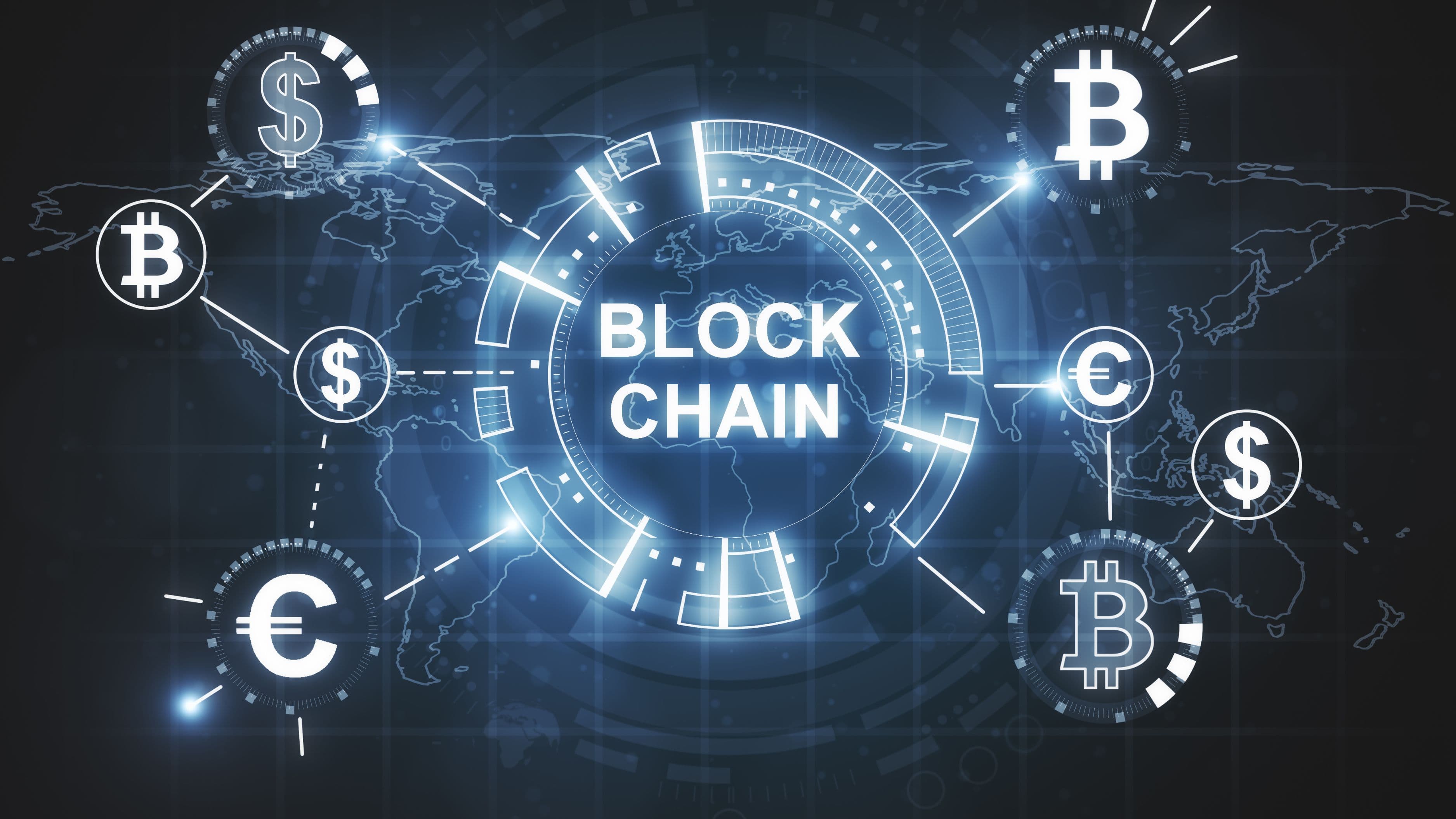
Blockchain solves a specific problem in supply chain finance: it creates a single shared record of transactions that all parties can trust without having to trust each other.
In a traditional supply chain, each participant keeps their own records – the supplier has one set of books, the buyer has another, the shipping company has its own logs, and the bank has its own documentation. When these records don't match, which happens regularly, someone has to manually reconcile the discrepancy. That takes time, introduces risk, and costs money.
A blockchain-based supply chain system creates what's called a shared ledger – a single version of events that everyone in the network can see and verify in real time. When a shipment leaves the warehouse, it's recorded on the blockchain. When it clears customs, that's recorded. When the buyer confirms receipt, that's recorded. Every entry is permanent, tamper-resistant, and visible to authorized participants. There's no need to reconcile competing records because there's only one record.
For supply chain finance specifically, this has a direct and practical impact. A bank considering whether to finance an invoice can see the full transaction history – the purchase order, the shipping confirmation, the delivery receipt, the buyer's payment commitment – verified and timestamped on a shared ledger. The due diligence process that might take days of manual document review can happen in minutes. Risk is lower, which often means financing costs less.
Smart Contracts and Automated Payments
The second layer of blockchain's impact on supply chain finance comes from smart contracts – self-executing programs that automatically carry out an action when predefined conditions are met.
In a supply chain context, a smart contract might say: "When the GPS tracker on this shipment confirms delivery at the buyer's warehouse and the buyer's system confirms acceptance, release payment automatically." No invoice needs to be submitted, no approval chain needs to be triggered, and no payment needs to be manually initiated. The contract executes itself when the conditions are satisfied.
This automation eliminates a significant source of delay and cost. According to a 2020 report by Accenture, the cost of processing a single trade finance transaction manually can exceed $100 when you account for document handling, compliance checks, and reconciliation. Smart contracts reduce that cost substantially by removing the manual steps from the process.
For suppliers, this means faster, more predictable payment. For buyers, it means less administrative overhead. For banks and financiers, it means cleaner data and lower operational risk. The same mechanism also enables more dynamic financing structures – for example, partial payments triggered at multiple checkpoints in the delivery process rather than a single payment at the end.
Real-World Examples Already in Operation
This isn't only theoretical. Several large-scale blockchain supply chain systems are already processing significant transaction volumes.
IBM Food Trust, built on the Hyperledger Fabric blockchain, is used by Walmart, Nestlé, Unilever, and other major food companies to track products from farm to shelf. What used to take days to trace – identifying which batch of a product came from which farm and which distribution route – now takes seconds. The system was partially motivated by food safety concerns after a 2018 E. coli outbreak in romaine lettuce, but the financial benefits are real too: faster dispute resolution, cleaner documentation for regulatory compliance, and better inventory visibility that reduces costly food waste.
Maersk, one of the world's largest shipping companies, partnered with IBM to build TradeLens – a blockchain-based platform designed to digitize and share shipping documentation across the global trade ecosystem. At its peak, TradeLens processed information from hundreds of ports and customs authorities. The platform was eventually discontinued in 2022 after struggling to achieve the broad industry adoption needed to make the shared ledger model work, which is an instructive cautionary note about the practical challenges of blockchain adoption even when the technology itself functions.
Marco Polo Network and Contour are blockchain-based platforms specifically focused on trade finance – connecting exporters, importers, and banks on a shared network to digitize letters of credit and invoice financing. HSBC, ING, and Standard Chartered are among the major banks using these platforms. Letters of credit, a centuries-old trade finance instrument that traditionally requires weeks of manual processing and courier-delivered physical documents, can be processed in days or hours on these networks.
The Specific Benefits for Smaller Suppliers
The biggest practical impact of blockchain in supply chain finance may be for smaller businesses, not large ones.
Large corporations with established banking relationships and strong credit ratings can already access supply chain financing on reasonable terms. The problem is acute for smaller suppliers, particularly those in developing markets, who are often forced to either absorb long payment delays or pay high rates to access financing because they can't easily verify their creditworthiness to a bank.
Blockchain-verified transaction history changes that calculation. A supplier who can demonstrate a clean, verified record of fulfilled orders, on-time deliveries, and consistent payment histories on a shared ledger has a credibility that doesn't depend on a traditional credit score or a long banking relationship. Fintech companies including Taulia, C2FO, and Greensill (before its collapse in 2021) have used supply chain data to extend financing to smaller suppliers at more accessible rates by treating verified transaction history as a proxy for creditworthiness.
This matters at scale. The International Finance Corporation estimates that the global trade finance gap – the difference between what businesses need in supply chain financing and what's actually available to them – stands at around $1.7 trillion, with small and medium-sized enterprises accounting for the majority of unmet demand. Reducing that gap by making creditworthiness verification cheaper and more accessible is one of the more concrete financial inclusion opportunities in the blockchain space.
The Limitations Worth Understanding
Blockchain's benefits in supply chain finance are real, but so are the barriers to broader adoption.
The shared ledger model only works if enough participants use the same system. A blockchain that tracks a shipment from a factory in Vietnam to a warehouse in Ohio is only useful if the factory, the shipping company, the customs broker, the insurer, and the buyer are all participating in the same network. Getting competing businesses, different countries' regulatory systems, and legacy IT infrastructure to interoperate on a common blockchain is a coordination challenge that technology alone can't solve. TradeLens' failure is the clearest example: the technology worked, but getting the shipping industry to standardize on one platform proved harder than expected.
Data quality is a related problem. Blockchain records what people enter into it. If a supplier marks a shipment as delivered before it actually arrives, that false data gets recorded with the same permanence and apparent authority as accurate data. Blockchain makes records tamper-resistant after the fact, but it doesn't prevent bad inputs from getting in. Ensuring that physical world events – a shipment's location, a delivery confirmation, an inspection result – are accurately captured before they hit the blockchain still requires trusted data sources, often involving IoT sensors, inspection services, or human verification.
Integration costs are significant for smaller businesses. Setting up the systems, APIs, and processes needed to participate in a blockchain supply chain network requires investment that large corporations can absorb more easily than small suppliers. There's a real risk that blockchain-based supply chain systems become another layer of advantage for large players rather than a tool that levels the playing field for smaller ones.
What This Means Practically
For most people, supply chain finance is a behind-the-scenes industry – it only becomes visible when it breaks down, as it did dramatically during the COVID-19 pandemic when supply chains seized up globally. But the efficiency of that infrastructure has direct effects on the prices you pay for goods, the resilience of product availability, and the economic health of the small suppliers embedded in global trade networks.
Blockchain-based improvements to supply chain finance reduce friction in a system that currently wastes enormous resources on paper-based processes and manual reconciliation. When that friction is reduced, goods move faster, financing is cheaper, and more businesses – particularly small ones – can participate in global trade on viable terms. The technology is already working in parts of the system. Whether it scales to become the default infrastructure for global trade finance depends largely on the coordination and adoption challenges described above, not on the technology itself.
For investors and finance professionals watching where fintech is heading, supply chain finance is one of the more grounded and less speculative areas of blockchain application. The problem being solved is well-defined, the early deployments are real, and the market opportunity is large. The execution challenges are also real, but they're the kind that get solved through industry collaboration and standardization rather than fundamental technical barriers.
FAQ
Does blockchain in supply chain finance affect everyday consumers? Indirectly, yes. When supply chain financing is more efficient, goods move faster and with less cost absorbed by suppliers and buyers in the chain. That can translate to lower prices, better product availability, and fewer supply disruptions at the retail level. Food safety traceability systems like IBM Food Trust also directly benefit consumers by enabling faster recalls when contamination is detected.
What's a letter of credit, and why does blockchain help with it? A letter of credit is a bank's guarantee that a buyer will pay a supplier. It's been a foundation of international trade for centuries, reducing risk for suppliers who might not trust a foreign buyer to pay after delivery. Traditionally, processing a letter of credit involves physical documents sent by courier, manual review by multiple bank officers, and a process that can take two to three weeks. Blockchain-based platforms like Contour digitize this process, reducing it to days or hours while maintaining the same legal protections.
Can small businesses use blockchain supply chain finance tools today? Some platforms are actively targeting small and medium-sized enterprises. Taulia and C2FO connect smaller suppliers with buyers' supply chain finance programs, using verified transaction data to extend financing. Access depends on whether the buyer you're supplying to is already participating in one of these networks. The landscape is evolving, but direct access for small businesses is growing.
What happened to TradeLens and what does it tell us? TradeLens, the Maersk-IBM shipping blockchain platform, was shut down in late 2022. Maersk cited the difficulty of achieving the level of industry-wide participation needed for the platform's shared ledger model to function optimally. It's a useful case study in the difference between technical feasibility and adoption challenges – the technology worked, but competing shipping companies, ports, and regulatory bodies couldn't align on a single shared system. It doesn't mean blockchain supply chain finance is a failed concept, but it illustrates why network effects and industry coordination matter as much as the technology itself.
How is blockchain different from existing supply chain software like SAP or Oracle? Traditional supply chain software like SAP manages records within a single company or a closed network of partners. Blockchain creates a shared, permissioned ledger that multiple independent organizations – including competitors – can all read and contribute to without any single party controlling it. The key difference is trust: with traditional software, you trust the company that owns the system; with blockchain, the record is verifiable by design without requiring trust in any single administrator.
📚 Sources
IBM Food Trust – Supply Chain Transparency Overview: https://www.ibm.com/products/food-trust
International Finance Corporation – "MSME Finance Gap Report": https://www.ifc.org/en/insights-reports/2017/msme-finance-gap
Accenture – "Trade Finance: Blockchain and the Future of Working Capital": https://www.accenture.com/us-en/insights/financial-services/blockchain-trade-finance
Contour – Digital Trade Finance Platform Overview: https://contour.network/how-it-works
World Trade Organization – "Trade Finance and SMEs": https://www.wto.org/english/res_e/booksp_e/tradefinsme_e.pdf
Harvard Business Review – "Building a Transparent Supply Chain": https://hbr.org/2020/05/building-a-transparent-supply-chain