This isn't a fringe experiment happening in a few small countries. The European Central Bank is developing the digital euro. China's digital yuan is already in circulation among tens of millions of citizens. The US Federal Reserve has been studying a potential digital dollar for years. CBDCs are moving from concept to reality, and the decisions being made right now will shape how money works for decades.
What a CBDC Actually Is
To understand what a CBDC is, it helps to understand what it isn't. It's not cryptocurrency in the way most people think of Bitcoin or Ethereum. Those are decentralized – they operate without a central authority, and their value isn't backed by any government. A CBDC is the opposite: it's issued and fully controlled by a central bank, backed by the government, and carries the same legal tender status as physical cash.
Think of it as the digital equivalent of a banknote. When you hold a $20 bill, you're holding a government-issued instrument with guaranteed value. A CBDC would be the same thing, except it lives on a digital ledger managed by the central bank rather than in your pocket. You might access it through an app, a digital wallet, or through your existing bank account, depending on how a country designs its system.
The key distinction from the money already in your bank account is who controls it at the foundation. When you deposit money at a commercial bank, the bank creates a liability to you – the bank owes you that money. If the bank fails, deposit insurance protects you up to a limit. With a CBDC held directly with the central bank, there's no commercial bank intermediary, no deposit insurance ceiling needed, and no counterparty risk. The central bank itself is the custodian.
Why Governments Are Interested
The motivations behind CBDCs vary by country, but a few consistent themes run through most government rationales.
Financial inclusion is one of the most frequently cited goals. In the US and many developed economies, millions of people remain unbanked – they don't have traditional bank accounts and rely on cash, check-cashing services, and prepaid cards for their financial lives. A CBDC accessible through a smartphone without a traditional bank account could extend formal financial services to people who are currently outside the system. In lower-income countries, where a significant share of the population lacks access to banking but has a mobile phone, this argument carries even more weight.
Reducing transaction costs and increasing payment speed is another driver. Cross-border payments today are slow, expensive, and routed through multiple intermediaries. Sending money internationally can cost 5–10% in fees and take days to settle. A CBDC-based system could reduce this friction significantly, making international transfers faster and cheaper – particularly relevant for remittances, where immigrant workers send money home to family in developing countries.
Maintaining monetary sovereignty is increasingly important as private digital payment systems grow. In China, Alipay and WeChat Pay had become so dominant in everyday transactions that the government had effectively outsourced much of the payments infrastructure to private companies. The digital yuan is partly a response to that – a way to reassert government control over the payments system. In Western countries, the rise of stablecoins (privately issued digital currencies pegged to the dollar) and the early prospect of Facebook launching its own global digital currency raised similar concerns. A government CBDC maintains the central bank's role at the center of the financial system.
Monetary policy effectiveness is a more technical but significant motivation. In theory, a CBDC could give central banks new tools for implementing policy. Negative interest rates – charging people to hold money rather than spend it – are nearly impossible to enforce on physical cash (you can just stuff it under the mattress), but technically workable on digital currency. Stimulus payments could be delivered instantly and directly to citizens' digital wallets rather than through paper checks or bank account transfers. These are powerful capabilities from a policy perspective, though they come with real trade-offs discussed below.
How the Digital Yuan Works in Practice
China's digital yuan, officially called the e-CNY, is the most advanced large-economy CBDC in operation. It's been distributed to millions of citizens through lottery systems and government voucher programs, particularly in major cities. Users access it through a dedicated app or through integrations in existing platforms like Alipay and WeChat Pay.
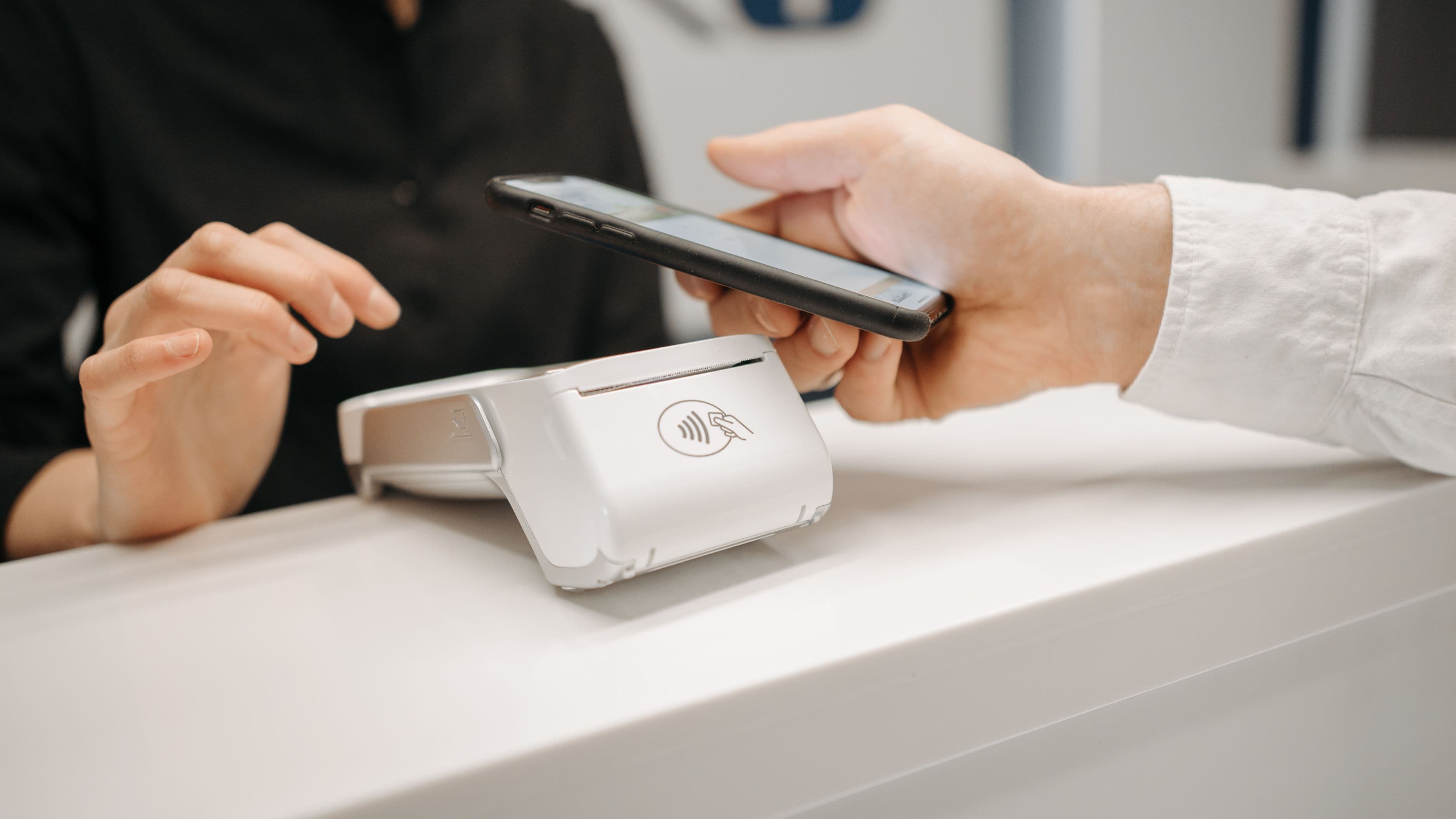
The practical experience is similar to existing mobile payments – you scan a QR code or tap to pay. The key differences are under the hood. Transactions on the digital yuan are recorded on a government-controlled ledger, which gives authorities visibility into spending patterns. The system also supports "programmable" features – for example, government vouchers issued in digital yuan can be restricted so they can only be spent at specific merchants or within a set time frame.
China has also built in a limited offline capability, which is significant for rural areas with unreliable internet access. Two devices with digital yuan stored on chips can transact without a live network connection, which gets closer to the cash-like behavior that existing mobile payment systems can't replicate.
The digital yuan has not replaced cash in China and doesn't appear designed to do so imminently. It's positioned as a complement to existing payment methods rather than a replacement, at least for now.
What the Digital Euro Would Look Like
The European Central Bank has been in the design phase of the digital euro for several years and has moved into a preparation phase that could lead to an actual launch decision in the coming years. The stated design principles are somewhat different from China's approach, reflecting the EU's stronger privacy norms and political emphasis on individual rights.
The ECB has committed to designing the digital euro with privacy as a core feature rather than an afterthought. Offline payments, anonymous small-value transactions (similar to using physical cash), and strict limits on the data the ECB itself would collect have all been proposed as design requirements. Whether these commitments survive the full implementation process is an open question, but they reflect a genuinely different political context than the Chinese approach.
The digital euro would be distributed through commercial banks rather than directly by the ECB, which preserves the existing banking system's role rather than bypassing it. There are also proposed limits on how much digital euro any individual can hold – possibly €3,000 – to prevent it from displacing commercial bank deposits in large quantities, which would destabilize the banking system.
The Real Concerns Worth Taking Seriously
CBDCs are not a straightforward upgrade to the existing financial system. The capabilities that make them attractive to governments are the same capabilities that raise legitimate concerns among individuals, civil liberties advocates, and financial analysts.
Surveillance risk is the most significant. A CBDC gives the issuing authority a complete, real-time record of every transaction made in that currency. Physical cash is anonymous – when you pay for something with a $20 bill, there's no permanent record linking you to that purchase. A CBDC, by its nature, is the opposite. Even systems designed with privacy protections have a central authority that maintains the underlying ledger and could potentially access transaction data under legal authority. How that data is protected, who can access it, and under what circumstances are policy questions that haven't been fully resolved anywhere.
Programmability and control is a related concern. If a CBDC can be programmed to only work for certain purchases, expire after a set time, or be frozen by the issuing authority, it becomes a fundamentally different kind of money than cash. Most CBDC proposals from democratic governments include restrictions on these capabilities, but the technical architecture would support them, which means the risk depends entirely on the political and legal constraints placed around the system – constraints that can change over time.
Disintermediation of commercial banks is a financial stability concern. If citizens can hold digital currency directly with the central bank and earn interest on it, they have a reason to move deposits out of commercial banks. Commercial banks use deposits to make loans; if deposit bases shrink, lending tightens and the broader economy feels it. The ECB's proposed holding limits are specifically designed to address this risk, but managing the transition remains a genuine design challenge.
Cybersecurity is an underappreciated risk. A CBDC system would be critical national infrastructure. A successful attack on the system – or even a serious operational failure – could disrupt the entire payments system of a country simultaneously. The centralization that makes CBDCs powerful and efficient also makes them a more concentrated target than the current distributed network of commercial banks and payment processors.
What This Means for Your Money
For most people in most countries, the practical impact of a CBDC rollout in the near term would likely be subtle. Existing payment methods would continue to work. Your bank account would remain your primary financial interface. The main differences might be in how government payments arrive – stimulus, tax refunds, benefits – and possibly in international transfer costs if CBDC-based cross-border systems mature.
The longer-term implications depend significantly on design choices that haven't been finalized. A CBDC designed with strong privacy protections, holding limits, and restrictions on programmability is a fairly benign digital complement to existing money. A CBDC without those protections is a different kind of instrument with meaningfully different implications for financial privacy and individual autonomy.
The most useful thing you can do right now is stay informed about the design decisions being made in your country or currency zone. These aren't technical details that only central bankers need to understand – they're policy choices that will directly affect how your money works and what visibility the government has into how you spend it.
FAQ
Is a CBDC the same as Bitcoin or crypto? No. Bitcoin and most cryptocurrencies are decentralized, meaning no government or central authority controls them. CBDCs are the opposite – they're issued, controlled, and backed by a central bank. They have guaranteed value in the same way as physical cash, but none of the decentralization that defines cryptocurrency.
Will CBDCs replace cash? Most governments proposing CBDCs explicitly state they're designed to complement cash, not replace it. Whether cash eventually phases out in practice is a longer-term question that depends on adoption patterns and future policy decisions. For now, every major CBDC proposal maintains cash as a continued option.
Could the government freeze or restrict my CBDC funds? Technically, the architecture of a CBDC would make this possible in ways that cash is not. Whether it happens in practice depends entirely on the legal and political constraints placed on the system. Democratic governments with strong rule of law are proposing designs with significant restrictions on these capabilities, but the underlying technical capability exists. This is one of the core policy debates around CBDC design.
Does the US have a CBDC? Not yet. The Federal Reserve has published research on a potential digital dollar and maintains that any US CBDC would require Congressional authorization. There's been significant political debate in the US about CBDCs, with some legislators pushing for legislation that would prohibit certain designs. No launch timeline exists for a US digital dollar as of mid-2025.
The Bottom Line
Central bank digital currencies are neither the financial revolution their proponents sometimes claim nor the surveillance dystopia their critics fear – at least not inherently. What they become depends on the design choices governments make, the legal protections built around them, and how much public scrutiny those choices receive before they're locked in.
The technology makes governments more capable of controlling, tracking, and programming money than they've ever been. Whether those capabilities are used responsibly is the question that matters most – and it's a question being decided right now, largely without much public debate.
📚 Sources
Bank for International Settlements. (2023). CBDCs: An opportunity for the monetary system. BIS Annual Economic Report – https://www.bis.org/publ/arpdf/ar2021e3.htm
European Central Bank. Digital euro explained. – https://www.ecb.europa.eu/paym/digital_euro/html/index.en.html
Atlantic Council. Central Bank Digital Currency Tracker. – https://www.atlanticcouncil.org/cbdctracker/
People's Bank of China. (2021). Progress of research and development of e-CNY in China. White paper – https://www.pbc.gov.cn/en/3688110/3688172/4157443/4293696/2021071614584691871.pdf
Federal Reserve. (2022). Money and Payments: The U.S. Dollar in the Digital Age. – https://www.federalreserve.gov/publications/money-and-payments-the-us-dollar-in-the-digital-age.htm
Auer, R., Cornelli, G., & Frost, J. (2020). Rise of the central bank digital currencies. BIS Working Papers – https://www.bis.org/publ/work880.htm