Cross-border payments move roughly $150 trillion annually. The systems handling most of that volume were built decades ago, and the friction baked into them costs businesses and individuals billions of dollars every year. Blockchain doesn't just make the existing system faster – it challenges the architecture entirely.
Why the Old System Is So Slow and Expensive
To understand what blockchain is changing, it helps to understand what it's replacing. Traditional international transfers run through a network of correspondent banks – financial institutions that hold accounts with each other in different countries and relay payments across borders on behalf of their customers. A payment from the US to the Philippines might move through three or four intermediary banks before reaching its destination, with each one taking a processing fee, applying its own cut-off times, and introducing potential for delays if anything in the chain doesn't match up.
SWIFT, the messaging network most international bank transfers travel through, is essentially a secure communications system between banks – it tells one bank to credit another's account, but it doesn't actually move money in real time. Settlement – the actual finalization of the transfer – can take one to five business days depending on currencies, countries, and how many intermediaries are involved. The fees aren't just explicit transfer charges; there are foreign exchange conversion margins, lifting fees, correspondent fees, and receiving bank fees that often aren't visible upfront. A transfer that looks like a $15 fee can quietly arrive $30–40 lighter due to these stacked costs.
For individuals sending remittances to family in lower-income countries, this cost burden is most acute. The World Bank tracks the average cost of sending $200 internationally as a key indicator – globally it hovers around 6–7%, meaning around $13 of every $200 sent disappears in fees. In the most expensive corridors, it's higher. These aren't abstract numbers; for families where remittances represent a significant portion of household income, the difference matters.
How Blockchain Changes the Mechanics
Blockchain enables something the correspondent banking system fundamentally can't: direct settlement between two parties without intermediaries, operating continuously, and recorded on a shared ledger that both sides can verify in real time.
In a blockchain-based payment, value moves from sender to recipient without passing through a chain of banks holding accounts for each other. The transaction is validated by the network, recorded immutably, and settled – often within seconds. There's no need for a correspondent bank in the destination country because the blockchain operates globally by design. There are no cut-off times because the network runs 24 hours a day, seven days a week, including weekends and holidays when traditional banking systems are closed.
The ledger transparency is also meaningfully different. In a traditional transfer, tracking where your money is at any given moment is opaque – you're trusting the banking chain to execute correctly. On a blockchain, every transaction is visible and verifiable by both parties. When a payment is confirmed, both sender and recipient can see it on the same ledger. This auditability reduces disputes and gives businesses much better visibility into their payment flows.
The cost reduction comes from eliminating the intermediary layers and their associated fees. A blockchain transfer using stablecoins – dollar-pegged digital tokens that don't expose the recipient to crypto volatility – can cost a fraction of a cent in network fees for a transaction that would have cost $30 through a bank wire. Even accounting for the on and off-ramps (converting local currency to the digital asset and back), the total cost is typically far below the traditional alternative.
The Real-World Infrastructure That's Already Working
Blockchain-based cross-border payments aren't theoretical. There's functioning infrastructure that's already processing significant volumes, across both institutional and consumer channels.
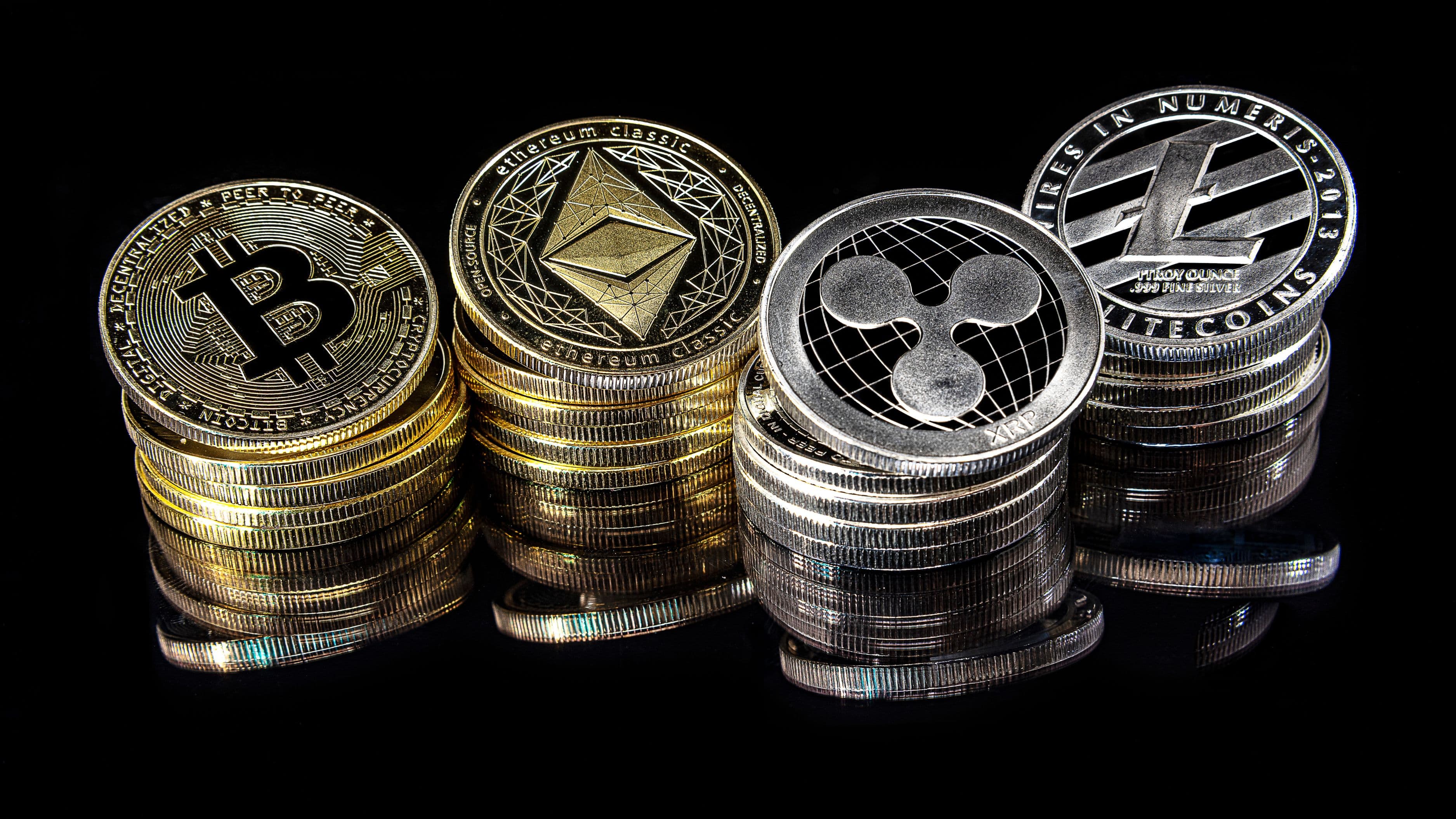
Stellar and Ripple (XRP Ledger) were built specifically for payment settlement. The Stellar network enables fast, low-cost transfers using its native token or stablecoins, and it's been adopted by remittance services in several developing markets. The XRP Ledger powers Ripple's banking partnerships, where financial institutions use XRP as a bridge currency to settle cross-border payments between currencies that don't have liquid direct markets. Several major banks and payment processors – including Santander through its One Pay FX product – have piloted or deployed Ripple-based settlement for cross-border transfers.
Circle's USDC has become a significant piece of cross-border payment infrastructure for businesses. Companies processing international invoices, paying overseas contractors, or managing multi-currency treasury operations can use USDC on networks like Stellar, Solana, or Ethereum to move dollar-equivalent value across borders quickly and with transparent fees. For B2B payments especially, this has real operational advantages over traditional wire transfers.
Wise (formerly TransferWise) uses a hybrid model that isn't strictly blockchain but illustrates the broader direction of travel. Rather than actually moving money across borders, Wise matches outgoing payments in one country with incoming payments from another, netting the flows locally to minimize actual cross-border settlement. The user experience is near-instant at low cost. As blockchain infrastructure matures, similar models with true blockchain settlement are emerging.
MoneyGram and Western Union, the legacy remittance giants, have both integrated blockchain and crypto settlement into parts of their networks – partly to reduce costs and partly because they recognize the competitive threat from blockchain-native alternatives. MoneyGram partnered with Stellar to enable real-time stablecoin settlement for cash-to-crypto corridors.
Why It Matters for Businesses
For businesses with international supply chains, overseas employees, or multi-currency operations, the practical implications of faster, cheaper cross-border payments compound quickly.
A small business paying contractors in five countries currently deals with five separate wire transfer processes, varying settlement times, currency conversion fees, and the administrative overhead of reconciling payments that land at unpredictable times. Blockchain-based business payment infrastructure – through platforms like Request Finance, Bitwage, or enterprise stablecoin solutions – collapses much of that friction. Contractors can be paid in their local currency equivalent within minutes rather than days, fees are predictable and low, and the payment record is automatically transparent and auditable.
For larger enterprises, the treasury management implications are significant. Holding working capital in multiple currencies to cover local payment obligations is expensive – you're exposed to exchange rate fluctuations and you're locking up capital in accounts that earn little. Blockchain settlement infrastructure that enables near-instant conversion and payment reduces the need for that multi-currency float, freeing up capital for more productive uses.
The accounts payable and receivable cycle also tightens. A supplier who currently waits five days for an international wire to settle – and carries the cash flow burden during that time – can instead receive near-instant settlement and improve their own liquidity. These are the kinds of supply chain finance improvements that blockchain proponents pointed to years ago as theoretical; they're increasingly practical now.
The Risks and Limitations That Still Exist
Blockchain cross-border payments aren't without real complications, and presenting them as a solved problem would be misleading.
Regulatory complexity is the largest practical barrier. Cross-border payments sit at the intersection of multiple jurisdictions' financial regulations – anti-money laundering (AML) requirements, know-your-customer (KYC) obligations, sanctions screening, and currency controls all apply. Traditional banks have compliance infrastructure built for this; blockchain payment networks are still maturing in this area. Operating across dozens of countries means navigating dozens of regulatory frameworks, some of which are actively hostile to crypto-based payment solutions.
On and off-ramp friction is the real-world bottleneck that limits how transformative blockchain payments can be right now. Moving value onto a blockchain from a traditional bank account (the on-ramp) and converting it back to local currency at the destination (the off-ramp) still involves the traditional financial system. In markets with limited crypto exchange infrastructure or banking access, this friction can be substantial. The blockchain leg of the journey might be instantaneous and cheap; the conversion legs on either side might not be.
Volatility exposure is a risk for anyone using non-stablecoin crypto for payments. If a business sends payment denominated in ETH and the price drops 10% during the few seconds of settlement, value has been lost. Stablecoins largely solve this problem for dollar-denominated transfers, but they introduce their own reserve and regulatory questions (as explored in the stablecoin debate).
Institutional adoption lag is real. Even as the technology matures, many banks and payment processors are slow to integrate blockchain settlement because of the compliance investment required, the risk of disintermediating their own correspondent banking revenue, and the organizational inertia of large institutions. The infrastructure is ahead of the adoption curve in many cases.
What to Watch Next
Several developments will determine how quickly this transformation accelerates. First, regulatory clarity – particularly in the US and EU – around stablecoin issuance and blockchain-based payment licensing will either unlock or constrain institutional adoption significantly.
MiCA in Europe has established a framework; US stablecoin legislation is still developing. Second, central bank digital currencies (CBDCs) are entering the cross-border payment picture – the Bank for International Settlements has run multiple pilot programs (Project mBridge, Project Dunbar) testing multi-CBDC platforms for international settlement between central banks, which would represent a fundamentally different infrastructure from commercial stablecoins. Third, the continued build-out of on and off-ramp infrastructure in emerging markets – particularly in Southeast Asia, sub-Saharan Africa, and Latin America, where remittance volumes are high and traditional banking access is uneven – will determine whether blockchain payments can fulfill their potential for the populations that stand to benefit most.
The underlying direction is clear: the correspondent banking model that has dominated international payments for decades is under structural pressure from faster, cheaper, more transparent alternatives. Blockchain is a central part of that alternative infrastructure, and the practical applications are further along than most people outside the industry realize.
FAQ
Do I need to understand crypto to use blockchain-based payment services? Not necessarily. Many consumer and business payment products use blockchain infrastructure under the hood without exposing users to any crypto complexity. You send in your local currency, the service handles the blockchain settlement, and the recipient receives in their local currency. The technology is invisible unless you choose to engage with it directly.
Are blockchain cross-border payments regulated? They're subject to regulation, though the frameworks are still evolving. Legitimate blockchain payment services operate under money transmission licenses, comply with AML and KYC requirements, and screen transactions against sanctions lists. The regulatory landscape varies significantly by country, and services operating without proper licensing carry legal and counterparty risk.
Is SWIFT being replaced by blockchain? Not imminently, but SWIFT is evolving in response to the competitive pressure. SWIFT has developed its own instant payment infrastructure and is exploring integration with blockchain-based settlement systems. The correspondent banking model it supports still handles the vast majority of international payment volume, but its market share in certain corridors is being eroded by faster alternatives.
What's the difference between a blockchain payment and a regular crypto transfer? A regular crypto transfer moves a volatile asset (Bitcoin, Ethereum) between two wallets. A blockchain payment for cross-border purposes typically uses stablecoins or purpose-built payment networks to move dollar-equivalent value without price volatility. The underlying blockchain technology is the same; the asset being transferred and the purpose are different.
Which businesses benefit most from blockchain cross-border payments right now? Businesses with frequent, smaller international payments – paying freelancers or contractors overseas, settling international supplier invoices, managing payroll across borders – see the most immediate practical benefit. The fee savings and settlement speed advantages compound with transaction frequency. Large single transactions still often travel through traditional bank channels where the infrastructure is established and the compliance is clear-cut.
📚 Sources
World Bank – Remittance Prices Worldwide – remittanceprices.worldbank.org
Bank for International Settlements – Project mBridge: Experimenting With a Multi-CBDC Platform – bis.org/publ/othp59.htm
Stellar Development Foundation – Cross-Border Payments Use Cases – stellar.org/learn/the-case-for-stellar
Ripple – How RippleNet Works for Cross-Border Payments – ripple.com/ripplenet
Circle – USDC for Business Payments – circle.com/en/usdc
SWIFT – SWIFT gpi: The New Standard in Global Payments – swift.com/our-solutions/swift-gpi