APIs are not a fintech-specific concept — they're a foundational building block of the modern internet. But in finance, where data security, regulatory compliance, and legacy infrastructure create unique challenges, the rise of financial APIs represents a genuine structural shift in how money moves and how financial services get built.
What an API Actually Is
API stands for Application Programming Interface. The "interface" part is the key word — it's a defined way for one software system to request and receive data or actions from another. Think of it like a waiter in a restaurant. You don't go into the kitchen yourself; you tell the waiter what you want, the waiter communicates your request to the kitchen, and the kitchen sends back your order through the same channel. The API is that standardized communication layer between two systems that don't need to know anything about each other's internal workings.
In practical financial terms: when a budgeting app like Mint shows you your bank balance, it's not logging into your bank's internal systems. It's calling your bank's API — sending a standardized request — and the bank's server responds with your balance data, formatted in a way the app knows how to read and display. The app never sees your bank's database. The bank never needs to rebuild its systems to support Mint specifically. The API is the handshake between them.
Why APIs Changed Everything for Fintech
Before APIs became the standard model for financial data sharing, building a fintech product that worked with your bank account was technically difficult, legally murky, and often involved screen-scraping — essentially having software log into your bank's website on your behalf and copy the data it could see on screen. This was fragile (a website redesign could break it), risky (you were sharing your full login credentials with a third party), and unpopular with banks that had no visibility into what was being done with their data.
APIs changed this by creating a formal, permissioned channel for data sharing. Instead of screen-scraping, a fintech connects to a bank via an API with explicit authentication — you grant permission, the bank issues a token, and the fintech accesses only the specific data you authorized. Banks maintain control over what's shared. Users maintain visibility into what they've consented to. And developers can build reliable products on a stable, documented connection rather than a fragile workaround.
This shift unlocked an explosion of fintech innovation. When Plaid, Yodlee, and similar financial data API platforms launched, they essentially built a translation layer between hundreds of financial institutions and thousands of developers. Instead of each fintech negotiating individual integrations with each bank, they could connect to one platform and access the financial ecosystem in aggregate. That's why new fintech apps can work with major banks on day one rather than spending years on bilateral partnership negotiations.
The Three Types of Financial APIs You Interact With Every Day
Financial APIs show up in your life in three primary ways, even if you've never thought about them by name.
Account data APIs are what let third-party apps read your financial information. When Mint shows your spending by category, when a mortgage lender instantly verifies your income during a loan application, or when a personal finance app pulls in all your accounts from multiple institutions into one dashboard — that's account data APIs at work. Plaid is the most widely known infrastructure provider in this category in the US, connecting to thousands of financial institutions and powering applications from Venmo to Credit Karma to Robinhood.
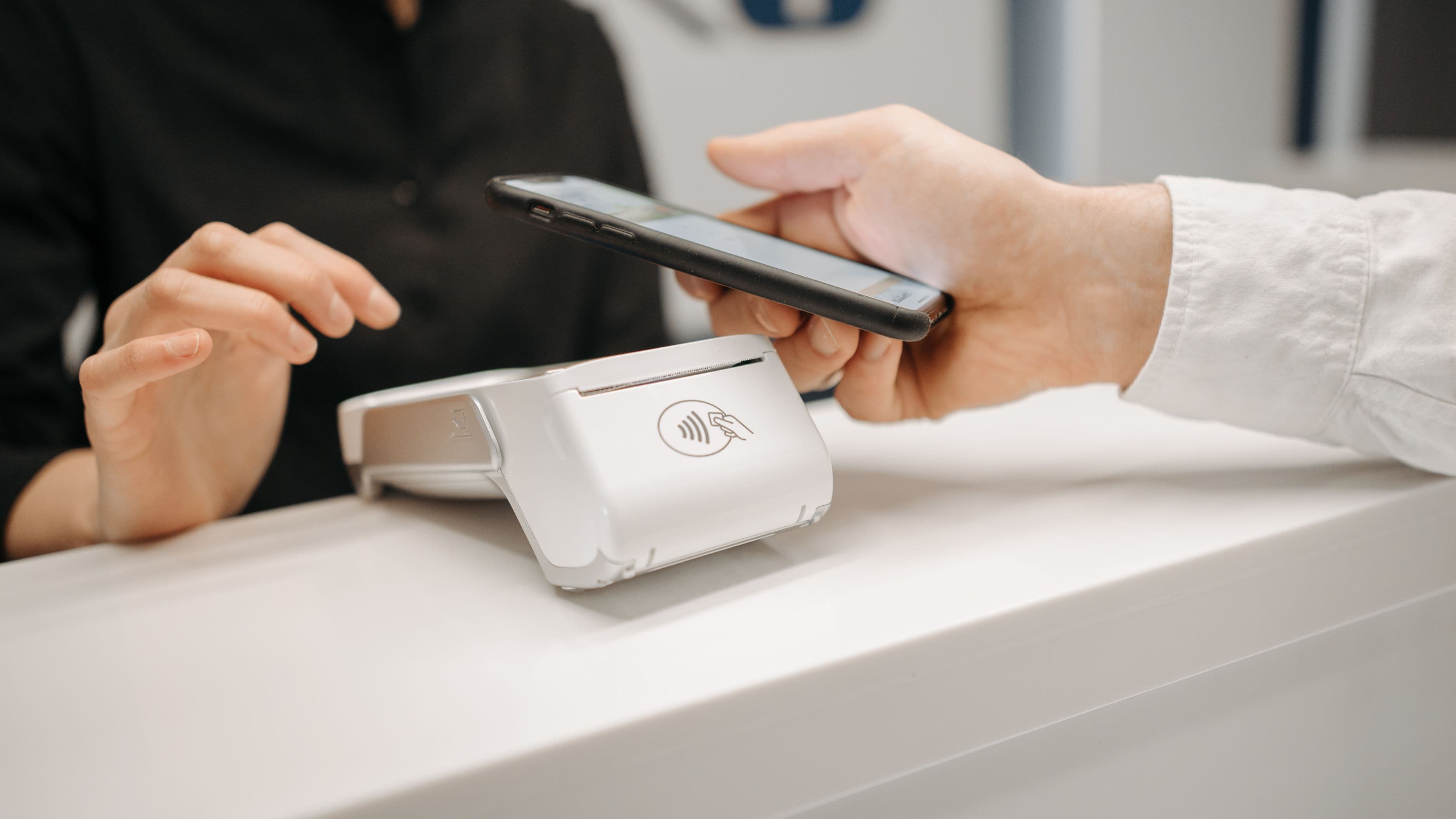
Payment APIs are what make money actually move. When you tap your phone to pay at a coffee shop, split a bill on Venmo, or send an international transfer through Wise, a payment API is executing that transaction. Stripe's API is probably the most widely used payment API in the world — it processes payments for millions of businesses, from one-person freelance operations to large enterprises. The reason so many apps can accept payments without building their own financial infrastructure is that Stripe and similar platforms abstract all the complexity into a set of API calls.
Open banking APIs are a newer, more regulated category that's more developed in Europe than in the US currently. Under the UK's Open Banking initiative and the EU's PSD2 regulation, banks are required to provide standardized APIs that let regulated third parties access customer account data and initiate payments with customer consent. The premise is that your financial data belongs to you, and you should be able to share it with whoever you choose, not just with the institution that holds it. The US is moving in a similar direction — the CFPB finalized its Personal Financial Data Rights rule in 2024, establishing the framework for open banking in the American market.
What This Means for Your Financial Life
The practical benefits of API-connected financial services are real and affect how you manage money daily, even if they're largely invisible.
Faster loan decisions are one of the most concrete examples. A lender using income verification APIs can confirm your salary, employment history, and bank balances in seconds by pulling data directly from the source with your permission. A decade ago, this process involved paper pay stubs, bank statements, and days of manual review. Now, many lenders can offer conditional approval almost instantly. The underlying enabler is an API call that would have taken weeks of fax machines and physical document handling in an earlier era.
Investment apps and robo-advisors that aggregate your full financial picture — not just the accounts held on their own platform — can give you genuinely useful advice because they can see your complete situation. If your robo-advisor knows about your checking balance, your existing brokerage holdings, and your outstanding debt, it can make more relevant recommendations than one working with partial information.
Real-time fraud detection across connected accounts is another benefit that often goes unnoticed until it matters. When transaction data flows through connected APIs, patterns that look anomalous relative to your normal behavior can be flagged instantly across multiple systems simultaneously, rather than each institution working in isolation.
The Risks and Trade-Offs Worth Understanding
API connectivity in finance comes with genuine trade-offs that every user should understand before linking accounts freely.
Data exposure risk. Every API connection you authorize creates a pathway between your bank and a third party. Most of these pathways are well-secured, but the security of that connection is only as strong as the least secure party. If a fintech app you've connected suffers a data breach, the data you shared with it — transaction history, account balances, sometimes more — is exposed. This doesn't mean avoiding API connections altogether, but it does mean periodically reviewing what you've authorized and revoking access to apps you no longer use.
Credential-sharing vs token-based access. Not all financial data connections are equally safe. Older screen-scraping approaches still used by some services require your actual bank username and password. Token-based API access — the modern standard — provides a limited-scope, revocable credential that doesn't expose your login details. When connecting a financial app, it's worth checking whether it uses a recognized API platform like Plaid or whether it asks you to enter your bank credentials directly. The latter is a significantly higher-risk approach.
Consent management and data use. When you authorize a financial app to access your data, the scope of what that consent covers varies. Some apps are transparent about using your data only to provide their service. Others may use anonymized transaction data for analytics, sell behavioral insights, or share data with partners. Reading the privacy policy before authorizing access matters more in finance than almost anywhere else.
System dependency risks. The more interconnected financial systems become through APIs, the more a problem in one part of the system can ripple through others. A major API provider going down affects all the apps built on it simultaneously. This isn't a reason to reject the model — the efficiency and accessibility gains are real — but it's worth understanding that interconnectedness creates systemic dependencies that didn't exist when each institution operated independently.
Where Open Banking Is Headed
The open banking framework accelerating in the US following the CFPB's 2024 rule is likely to change how you think about your relationship with financial institutions over the next several years. The core premise — that consumers own their financial data and should be able to share it on their own terms — has significant implications.
It means that switching banks or financial services becomes easier, because you can take your data history with you. It means that new entrants with better products can compete for your business without the multi-year relationship advantage that incumbent banks currently enjoy. And it means that the aggregated view of your financial life — income, spending, savings, debt, investments — can be made available to a wider range of services that could offer you genuinely personalized financial guidance, not just generic recommendations.
The counter-pressure is that open banking also creates new attack surfaces and data handling obligations that need robust regulatory oversight. The balance between innovation and protection is the central tension of the open banking transition, and how that tension gets resolved will shape what the financial system looks like for everyday users for decades.
FAQ
Is it safe to connect my bank account to third-party apps? Generally yes, if you're using well-established apps that connect via token-based API platforms like Plaid rather than asking for your bank credentials directly. The practical risk is low for reputable apps, but it's worth periodically reviewing your authorized connections and revoking access to apps you no longer use.
What is Plaid and why do so many apps use it? Plaid is a financial data infrastructure company that acts as a bridge between consumers' bank accounts and fintech apps. Rather than each app building individual integrations with each bank, they connect to Plaid, which handles the banking connections on their behalf. It powers the account-linking functionality in thousands of apps including Venmo, Robinhood, and Coinbase.
What is the difference between open banking and regular banking? Regular banking is a closed system — your bank holds your data and decides what you can do with it. Open banking is a framework where you, the consumer, control who your bank shares your data with, through regulated API connections. Open banking has been standard in the UK and EU for several years and is now being formalized in the US through the CFPB's Personal Financial Data Rights rule.
Can I revoke an app's access to my bank account? Yes — and you should do this for any apps you no longer use. You can typically revoke access either through the app itself, through your bank's connected accounts settings (most major banks now show you all authorized third-party connections), or through the API platform (Plaid has a consumer portal called Plaid Portal where you can manage and revoke all your connections).
The connected financial system powered by APIs is not something happening to finance in the future — it's the infrastructure your financial life already runs on today. Understanding how it works helps you use it more intentionally: knowing what data you're sharing, why, and with whom. That awareness is worth more than any individual app feature.
📚 Sources
CFPB – Personal Financial Data Rights Final Rule (2024): https://www.consumerfinance.gov/rules-policy/final-rules/personal-financial-data-rights/
Plaid – How Plaid Works: https://plaid.com/how-it-works/
Stripe – Stripe API Documentation Overview: https://stripe.com/docs/api
Open Banking UK – What is Open Banking?: https://www.openbanking.org.uk/what-is-open-banking/
European Banking Authority – PSD2 Overview: https://www.eba.europa.eu/regulation-and-policy/payment-services-and-electronic-money/regulatory-technical-standards-on-strong-customer-authentication-and-secure-communication-under-psd2
Federal Reserve – The US Path Toward Open Banking: https://www.federalreserve.gov/econres/feds/the-road-to-open-banking-a-primer.htm
McKinsey & Company – The New Financial Services Infrastructure: https://www.mckinsey.com/industries/financial-services/our-insights/financial-services-infrastructure