The traditional defenses – passwords, security questions, basic two-factor authentication – haven't kept up. Passwords get leaked in data breaches. Security questions have knowable answers. SMS verification codes can be intercepted. The people trying to break into your financial accounts are operating at scale, with tools designed to defeat static authentication. The financial industry's response has increasingly been to fight automation with automation – using AI-powered identity verification to detect and stop account takeovers before they complete.
Here's what that technology actually does, how it works in practical terms, and what it means for the security of your accounts.
What an Account Takeover Actually Looks Like
Before getting into the AI side, it's worth understanding the attack itself, because the sophistication of the defense needs to match the sophistication of the threat.
An account takeover isn't usually a hacker sitting at a keyboard trying to guess your password. It's typically automated and operates at scale. Attackers use a technique called credential stuffing – feeding large databases of username and password combinations (harvested from previous data breaches on unrelated sites) into login systems automatically, testing thousands of combinations per hour. Because many people reuse passwords across multiple accounts, a breach at one site creates a usable list of credentials for financial accounts elsewhere.
Once inside, attackers move quickly. They change contact information so the real account holder loses recovery access. They set up new payees and transfer funds. They apply for credit products using the account holder's verified identity. The entire sequence can complete in under an hour, long before the real account holder notices anything is wrong.
What makes this hard to detect with traditional controls is that the attacker often has legitimate credentials – the right username and password – so the login itself looks correct. The fraud isn't in breaking the authentication; it's in what happens after.
What Identity Verification AI Does Differently
Traditional authentication asks: do you have the right credentials? AI-powered identity verification asks a broader question: is this really you?
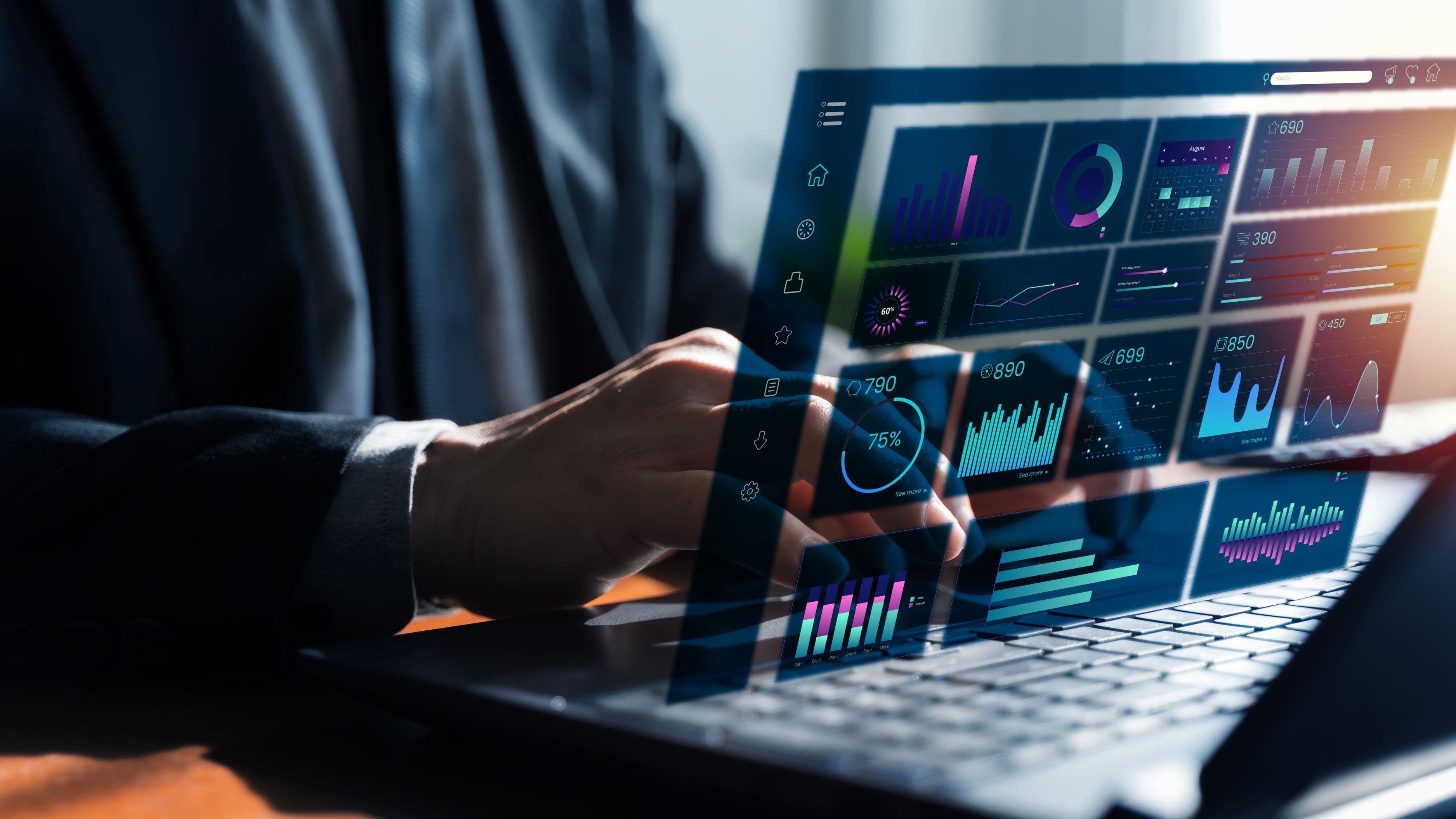
The difference is the data it uses to answer that question. Where a password system checks one data point (the password), behavioral and biometric AI systems analyze dozens or hundreds of signals simultaneously, in real time, to build a picture of whether the person logging in or taking an action matches the expected profile of the account holder.
Think of it like this: your bank has seen thousands of your previous interactions. It knows roughly when you typically log in, what device you usually use, where you typically access the app from, how you typically navigate through the interface, what kinds of transactions you make, and how large they usually are. When something deviates significantly from that established pattern – a login from a new device in a different city, followed immediately by a large transfer to a new payee – that combination of signals triggers a flag, even if the password was entered correctly.
No single signal is definitive. But many signals evaluated together, in context, produce a risk score that's far more accurate than any single-factor check.
The Main Technologies at Work
Behavioral Biometrics
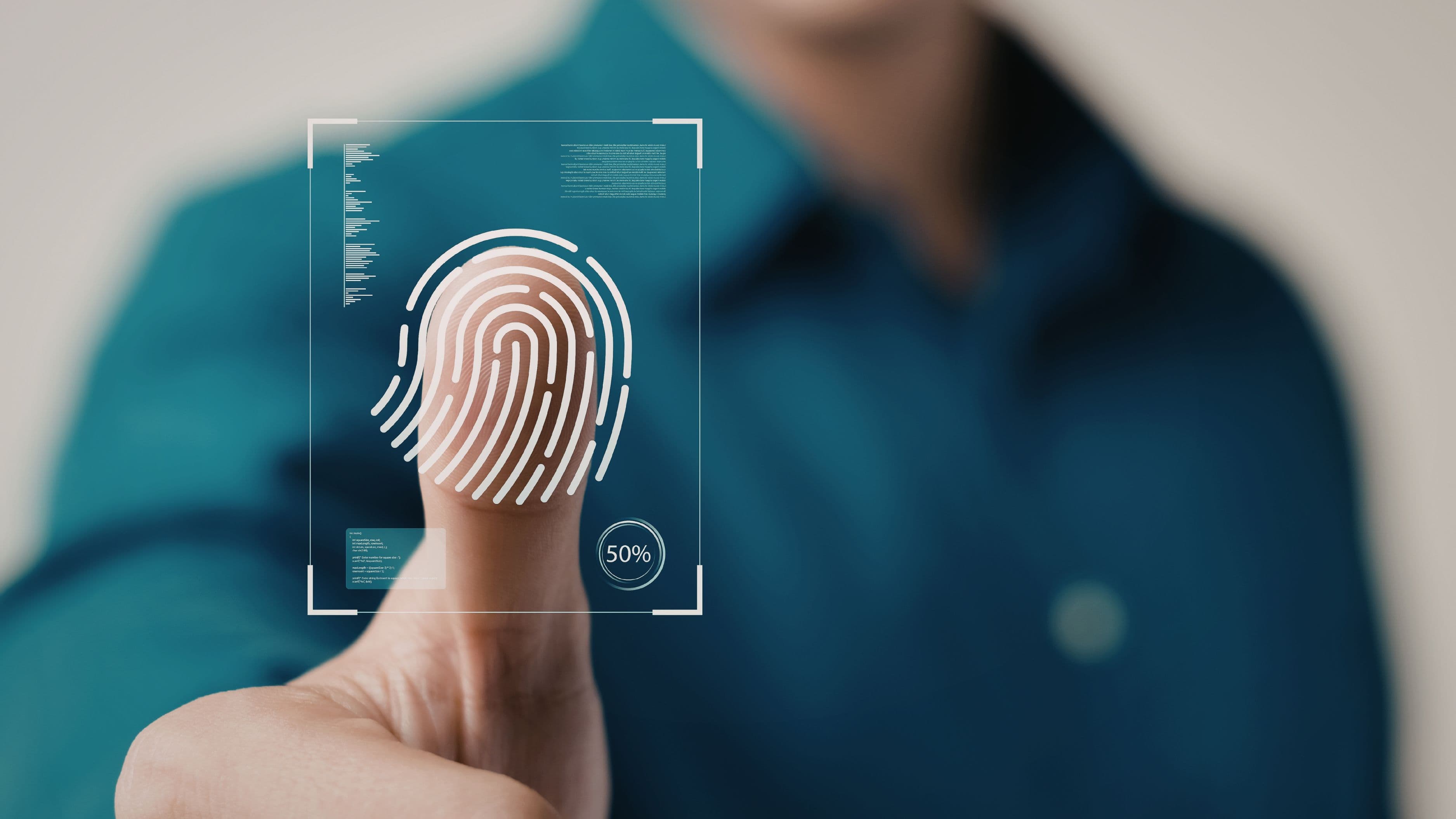
Behavioral biometrics is one of the more remarkable technologies in this space because it's invisible to the user and difficult to fake. It analyzes how you interact with a device – the speed and rhythm of your typing, how you hold your phone (reflected in the accelerometer and gyroscope data), how you move and click a mouse, the pressure patterns of your touch on a screen.
These patterns are surprisingly unique and surprisingly stable. Your typing rhythm on a keyboard is as distinctive as a fingerprint, in the sense that it's hard to replicate accurately even if someone knows it exists. An attacker controlling a device remotely – through malware, or using automated scripts – produces behavioral patterns that are statistically different from a human user in ways that AI models can detect. A legitimate user navigating their banking app in their usual way produces behavioral data that closely matches historical baselines. A bot or an attacker produces data that doesn't.
The practical implication: even if an attacker has your password and is logged in with your credentials on a device that looks legitimate, behavioral biometric analysis may still flag the session as anomalous because the interaction patterns don't match yours.
Device Fingerprinting and Session Analysis
Every device that connects to a financial platform leaves a unique signature – a combination of browser type, operating system version, screen resolution, installed fonts, time zone, and dozens of other technical characteristics that together create what's called a device fingerprint. AI systems use these fingerprints to build a history of the devices you use, and to identify when a login attempt comes from a device that has never been associated with your account.
Session analysis extends this to the behavior within a session. How quickly does the user navigate from login to a transfer? Are they visiting pages in an unusual order? Are they copying and pasting account numbers rather than typing them? These behavioral markers within a session are different from the baseline behavioral biometrics described above – they're about what you're doing in the app rather than how you're physically interacting with the device.
When device fingerprinting shows an unknown device, and session analysis shows unusually direct navigation toward high-risk actions (like adding a new payee and initiating a transfer), the combined risk score rises steeply. The system may step up authentication – asking for a biometric confirmation, a one-time code, or a live ID check – before allowing the action to proceed.
Document and Face Verification AI
When a new account is opened or a high-risk change is requested (like adding a new bank account for outgoing transfers, or changing a password after the email address was changed), many financial institutions now require document verification alongside a selfie or live video check.
AI-powered document verification checks the authenticity of an ID document – examining holograms, font consistency, microprint, and other security features that a fraudster using a fake or altered document is likely to get wrong. The same AI that processes the document compares the photo on the ID to the selfie submitted by the user, using facial recognition to verify they match. Liveness detection – which checks for blinking, head movement, or other signs of a live person – prevents attackers from simply holding up a photo of the account holder's face.
This technology is now standard at most major banks and fintech platforms for account opening. Its extension to high-risk in-account actions (not just initial registration) is where the defense is growing most actively.
Anomaly Detection Across Transactions
Beyond the login and authentication layer, AI systems continuously monitor account activity for patterns that suggest fraud in progress. This is where machine learning models trained on millions of historical fraud cases earn their value.
The patterns they look for are nuanced. A single large transfer might be unusual for one account but normal for another. What the model cares about is the deviation from your specific historical pattern, combined with other signals. A large transfer to an unfamiliar payee might not trigger a flag in isolation. A large transfer to an unfamiliar payee initiated from a new device at an unusual time of day, with unusually rapid navigation within the session, produces a combined risk profile that warrants intervention.
The speed of this analysis is also significant. These risk scores are calculated in milliseconds – within the transaction request itself – rather than after the fact. When the score crosses a threshold, the system can pause the transaction, require additional verification, or block it entirely, in real time, before the money moves.
Why This Matters for You Specifically
If you use a major bank, a large fintech platform, or a brokerage account, versions of this technology are almost certainly already running in the background when you log in. You may have noticed step-up authentication moments – being asked to verify via biometric or one-time code when you try to do something out of your normal pattern – without knowing the AI flagged your session.
The practical implication for you as an account holder is largely positive: the protection is automated and requires nothing from you beyond normal account use. Your normal behavioral patterns, your usual devices, and your typical transaction habits are the baseline the system defends. Deviations from that baseline – whether caused by a fraudster or by you genuinely doing something unusual – trigger additional verification rather than automatic access.
That last point is worth understanding: if you log in from a new device while traveling, or try to make a larger-than-usual transfer, expect the system to ask for additional confirmation. That friction isn't a malfunction – it's the detection layer working as designed.
The Limitations and Risks
No system is perfect, and AI identity verification has real limitations worth understanding.
False positives are the most common friction point. A legitimate account holder flagged as suspicious – because they're traveling, using a new phone, or making an atypical transaction – will be asked for additional verification or may have a transaction temporarily blocked. For most people in most situations, this is a minor inconvenience. For someone trying to make a time-sensitive payment, it can be more disruptive. Financial institutions tune their models to balance security and friction, and that balance is imperfect.
Sophisticated attackers adapt. The arms race between fraud systems and fraudsters is ongoing. Techniques like using residential IP addresses (rather than VPN addresses that are easier to flag), introducing deliberate delays into automated scripts to mimic human pacing, and using malware that hijacks a legitimate user's authenticated session are all attempts to defeat the behavioral signals these systems rely on. No current system catches all fraud.
Biometric data raises privacy questions. Behavioral biometrics and facial recognition involve collecting and processing highly personal data. How that data is stored, retained, shared, and protected varies by institution. Reading the privacy policy of any financial platform you use to understand what biometric data is collected and how it's used is increasingly worth the effort.
AI models can carry biases. Facial recognition systems have documented higher error rates for certain demographic groups, particularly darker-skinned individuals and women, as identified in multiple peer-reviewed studies. In a financial identity verification context, this can result in legitimate users facing higher rates of failed verification – a real equity concern that the industry is actively but unevenly addressing.
What to Watch for Next
The trajectory in this space is toward more continuous authentication – systems that verify identity not just at login but throughout a session, constantly recalibrating the risk score as the session evolves. The shift from "prove who you are once at the start" to "demonstrate you're still you throughout the interaction" closes the window that attackers currently exploit by using stolen credentials to get past the front door.
Federated identity systems – where a verified identity from one institution can be used as trusted authentication at another – are also developing, though slowly, given the complexity of sharing identity data across institutions while maintaining security and privacy. In the meantime, AI-powered identity verification within individual platforms continues to improve, and the baseline protection it offers to account holders is meaningfully stronger than it was five years ago.
Frequently Asked Questions
Can an account takeover happen even with two-factor authentication enabled? Yes. SMS-based two-factor authentication (where a code is sent to your phone) can be defeated through SIM-swapping – convincing a mobile carrier to transfer your phone number to a SIM the attacker controls. Authenticator apps (Google Authenticator, Authy) are more secure than SMS because the code is generated on your device rather than delivered over the phone network. AI identity verification adds another layer that operates independently of which authentication method you use.
Does this technology work the same way at all banks? No. The sophistication of identity verification AI varies significantly across institutions. Larger banks and well-funded fintechs typically have more advanced systems. Smaller institutions may rely on simpler, less adaptive controls. The category of institution matters – neobanks and digital-first platforms often have more modern fraud infrastructure than legacy banks with older core systems.
What can I do to help this system protect me better? Using the same devices consistently, keeping contact information current, and enabling biometric login (Face ID or fingerprint) where available all make it easier for the system to establish a reliable baseline for your account. Reporting unusual activity immediately is also important – the faster the bank knows about an anomaly, the faster the protective response.
What happens if the AI incorrectly blocks a legitimate transaction? You'll typically be presented with a step-up verification option – a biometric check, a one-time code, or a call to customer service to confirm your identity. In most cases, this resolves the block quickly. If a transaction is blocked that you intended to make, contacting your bank directly is the most reliable path to resolution.
Is my behavioral data stored by my bank? It varies by institution. Most banks store some form of behavioral baseline for fraud detection purposes, but the specific data retained, the retention period, and how it's protected differ. Your bank's privacy policy and, in some jurisdictions, its regulatory filings will be the most authoritative source on what's collected and how it's used.
Account takeovers are one of the fastest-growing categories of financial fraud precisely because the traditional defenses have fallen behind. AI-powered identity verification – behavioral biometrics, device fingerprinting, document verification, continuous transaction monitoring – represents the financial industry's most effective current response to that threat. It's not flawless, and the privacy trade-offs are real. But for most account holders, the technology operating quietly in the background of every login is providing meaningfully stronger protection than anything that existed a decade ago.
Understanding that it exists, and how it works, puts you in a better position to work with it – rather than being puzzled when it asks you to verify yourself at an unusual moment.
📚 Sources
Federal Trade Commission – Identity Theft and Account Takeover Statistics: https://www.ftc.gov/reports/consumer-sentinel-network
FIDO Alliance – Passwordless Authentication and Behavioral Biometrics Overview: https://fidoalliance.org/overview
Javelin Strategy & Research – Identity Fraud Study Overview: https://javelinstrategy.com/coverage-area/identity-fraud
MIT Media Lab – Gender and Skin Type Bias in Commercial Facial Recognition: http://gendershades.org
FinCEN – Account Takeover Fraud and Financial Institution Guidance: https://www.fincen.gov/resources/advisories
NIST – Digital Identity Guidelines (SP 800-63): https://pages.nist.gov/800-63-3
Plaid – How Bank-Level Security Works in Fintech: https://plaid.com/how-it-works-for-consumers